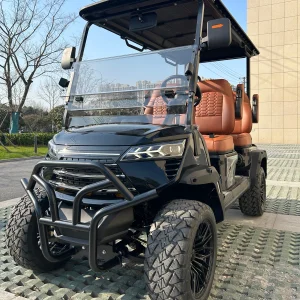
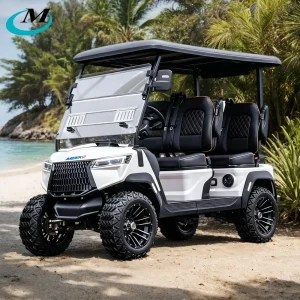
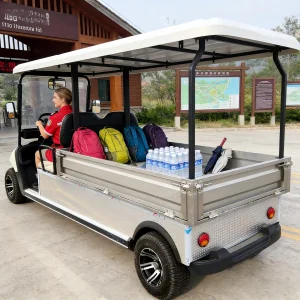
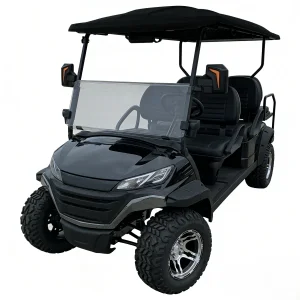
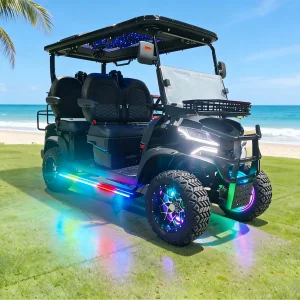
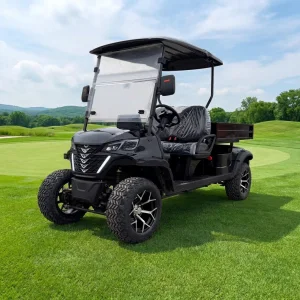
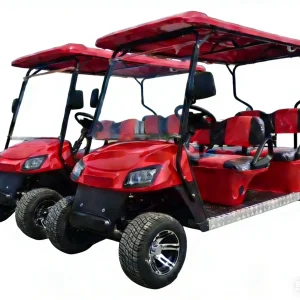
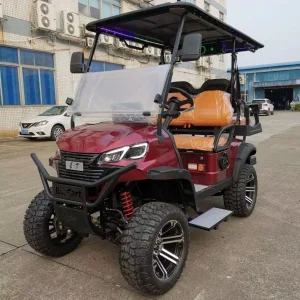
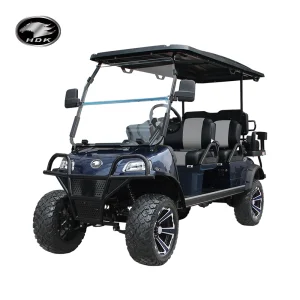
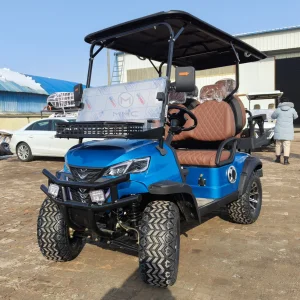
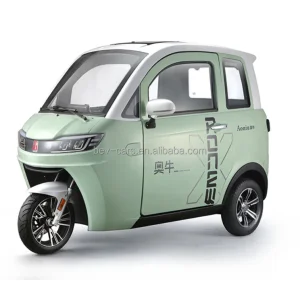
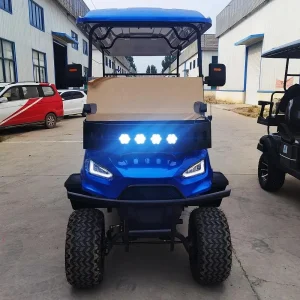
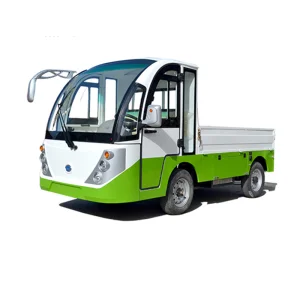
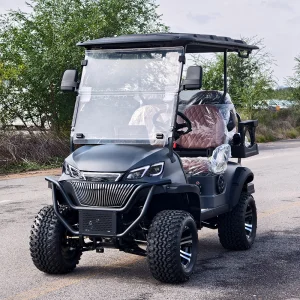
Explore our baseline heavy-duty transit and customized personal golf carts, engineered in our state-of-the-art facility for peak durability, comfort, and compliance.
As global demographics undergo a historic shift toward aging populations, the requirements governing short-distance transit and micro-mobility have fundamentally changed. Today, standard utility vehicles and recreational golf carts no longer meet the complex accessibility, safety, and regulatory frameworks required by retirement villages, medical complexes, international airports, municipal parks, and luxury resorts. The modern gold standard is defined by Age-Friendly Transport Carts—micro-mobility solutions engineered with universal design principles to serve passengers with varying levels of physical dexterity.
In the context of the global supply chain, China has transitioned from a high-volume manufacturing assembly base to a center of R&D excellence for specialized low-speed electric vehicles (LSEVs). Led by industry-focused manufacturers like Shenzhen Kabar Golf Co., Ltd., Chinese exporters are now defining international parameters for safety, ergonomic integration, and intelligent drivetrains. By combining state-of-the-art power electronics, advanced battery chemistries, and specialized chassis construction, these transport platforms provide seamless transit operations while prioritizing passenger dignity, physical safety, and operational longevity.
B2B procurement professionals, fleet directors, and municipal asset managers must evaluate age-friendly utility vehicle acquisitions through a multi-dimensional framework. The purchasing decision requires balancing raw physical longevity with the specialized design needs of aging demographics. Organizations investing in large-scale passenger transit fleets prioritize three critical operational parameters:
Integrating low-entry thresholds (<250mm ingress clearance), non-slip textured surfaces, and handrail systems that comply with international accessibility standards to reduce fall hazards during boarding.
Full certification profiles including CE marking, EEC/COC approvals for European street-legal micro-cars, and compliance with DOT/SAE criteria for low-speed vehicles (LSV) operating on public access roads.
Lowering Total Cost of Ownership by migrating to lithium iron phosphate (LiFePO4) power platforms, integrated solar charging panels, and highly efficient AC asynchronous or permanent magnet motors.
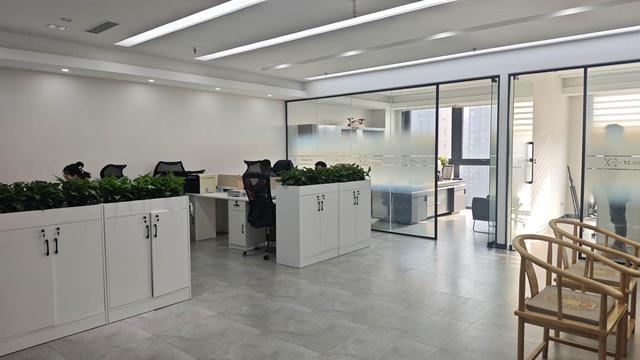
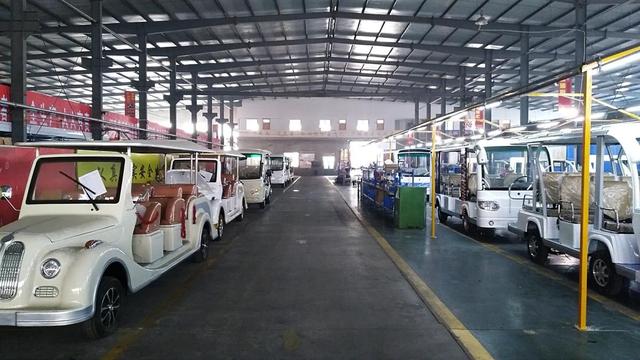
Established in 2014 and situated within the manufacturing hub of Shenzhen, Guangdong, China, Shenzhen Kabar Golf Co., Ltd. stands as a professional golf cart manufacturer and customized mobility solution provider. Over more than a decade, the company has scaled its operations to include an advanced production facility spanning over 18,000 square meters and a technical staff of more than 220 assembly specialists, R&D engineers, and quality controllers. This industrial scale allows Kabar Golf to serve municipal authorities, hospitality groups, industrial facilities, and transport operators globally.
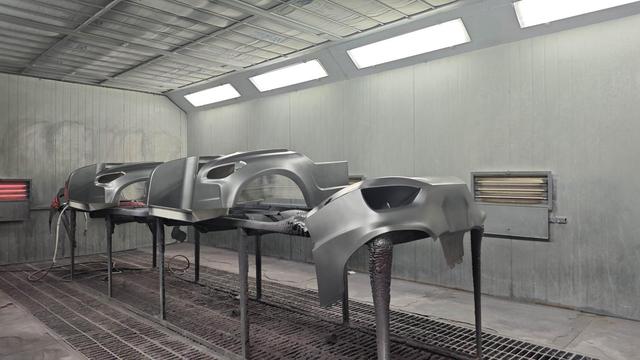
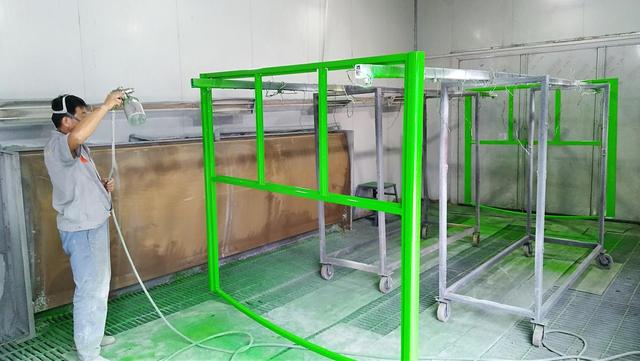
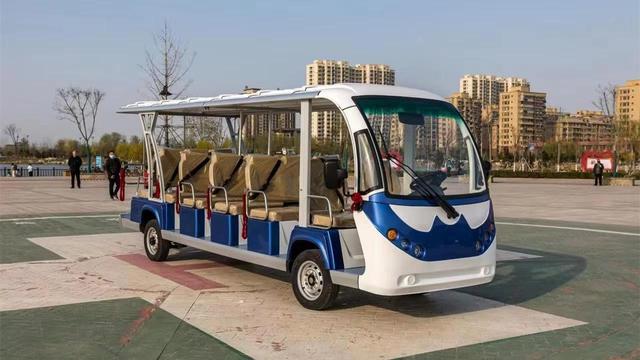
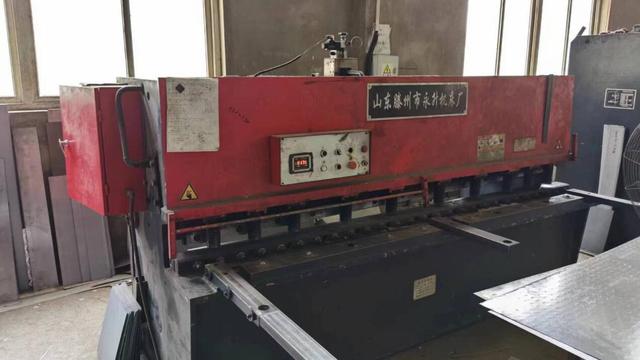
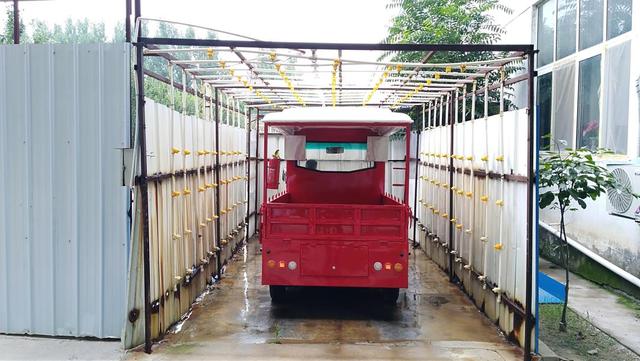
Kabar Golf's product portfolio is engineered to address diverse transit demands. The product suite includes standard electric golf carts, multi-passenger transit shuttles, customized utility trucks, cargo carriers, resort shuttles, street-legal LSVs, and specialized accessibility solutions. Focused on the core values of vehicle reliability, passenger safety, structural integrity, and ecological responsibility, Kabar Golf implements a strict, multi-stage quality control protocol that monitors every phase of assembly, from structural welding to final dynamometer and brake testing.
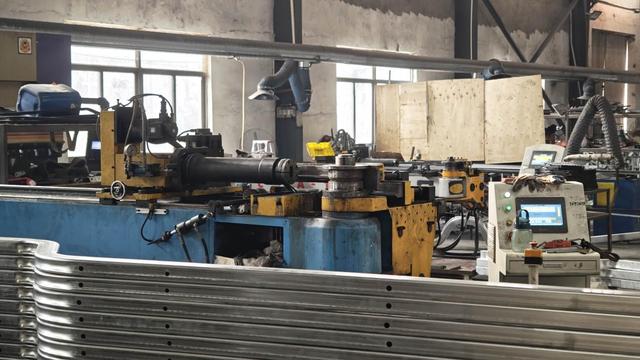
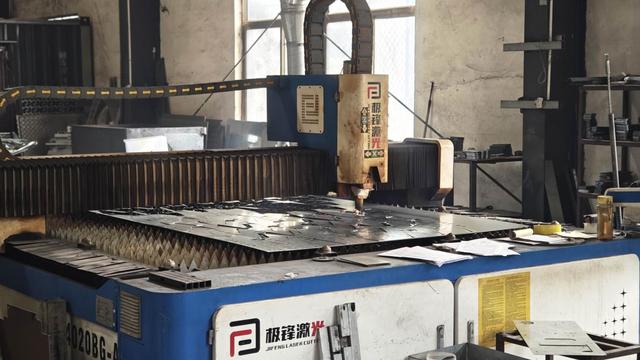
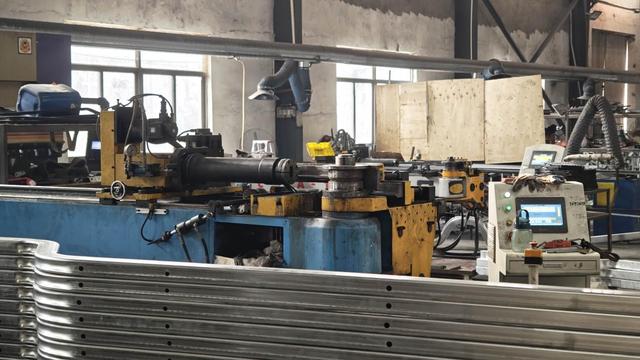
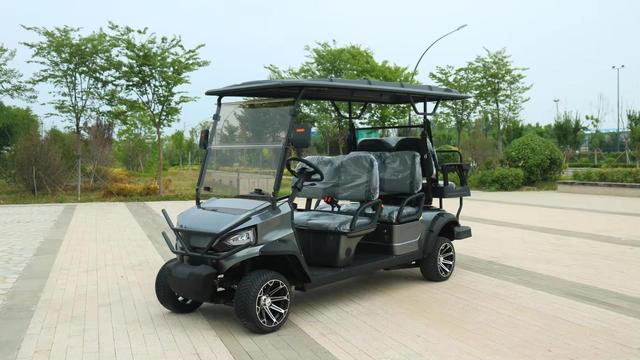
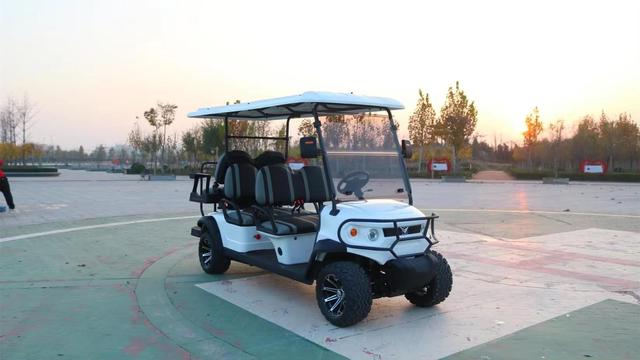
To qualify as an age-friendly transport cart, a low-speed electric vehicle must be engineered from the ground up to address specific physical needs. Standard modifications to existing utility vehicles are often insufficient; safety and reliability require comprehensive chassis, suspension, powertrain, and control-system integration.
Traditional utility vehicles often present step heights exceeding 350mm, creating knee strain and fall risks. Our age-friendly designs incorporate drop-beam ladder frames that lower the threshold step height to less than 240mm. The driver and passenger seating structures use high-density, multi-layered polyurethane foam with integrated lumbar contours, reducing skeletal stress during transit. Handrails are manufactured from powder-coated structural steel, offering multiple leverage heights to accommodate diverse user sizes.
Smooth vehicle acceleration and deceleration curves are essential to prevent sudden movements that could cause passenger falls. Integrating high-performance AC controllers (such as Curtis and Inpower programmable units) allows for customized mapping of throttle inputs. This ensures gradual starts, even on steep inclines. Standard drive configurations leverage highly efficient 48V, 60V, or 72V AC induction motors (ranging from 4kW to 7.5kW) paired with regenerative deceleration networks that recover kinetic energy during braking, increasing range while ensuring smooth stops.
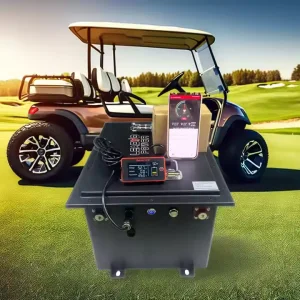
While flooded lead-acid batteries have long been the industry standard, modern fleet procurement focuses on Lithium Iron Phosphate (LiFePO4) technology. Partnering with major cell manufacturers like BAK enables the configuration of high-density packs (36V/48V/72V with capacities up to 300Ah). These lithium batteries feature an integrated Battery Management System (BMS) with real-time CAN bus monitoring, protecting against thermal overruns, overcharging, and deep discharges. Furthermore, roof-integrated solar charging arrays provide auxiliary charging, which can extend field operations by up to 20-30% on sunny days.
To minimize operator error and enhance site safety, Kabar's vehicles can be equipped with electromagnetic automatic parking brakes. These brakes engage immediately when the vehicle stops, preventing rolling on slopes. Integrated speed-limiting networks can also restrict maximum velocity within designated pedestrian zones via GPS geofencing, maintaining safe operating speeds on university campuses, resorts, and healthcare facilities.
Navigating import tariffs, customs clearance, localized transport safety directives, and post-sales technical support represents a significant challenge for procurement agents. Sourcing age-friendly transport carts from China requires a manufacturer capable of complying with diverse regional frameworks:
Meets safety standards for low-speed vehicles (LSVs) under Federal Motor Vehicle Safety Standard (FMVSS) 500, including safety glass windshields, turn signals, seatbelts, and reflectors.
Vehicles designed for European road operations undergo L2e/L6e/L7e type-approval testing to secure Certificate of Conformity (COC) documentation for straightforward vehicle registration.
By partnering with reliable global logistics providers, Kabar ensures protective container loading, custom documentation clearance, and steady spare parts distribution.
The development of age-friendly transportation goes beyond basic physical accessibility. Over the next five years, autonomous technologies, advanced sensor integration, and cloud-connected fleet management systems will become standard features in specialized low-speed electric vehicles.
Deploying advanced driver assistance systems (ADAS) specifically calibrated for low-speed environments. This includes forward-collision warning sensors, pedestrian detection algorithms, and automatic speed reduction systems operating in high-density senior living communities.
Transitioning to next-generation energy storage options, including solid-state lithium-metal packs. These batteries offer higher energy density and improved thermal stability across extreme temperatures. Additionally, new high-efficiency perovskite solar cells will be integrated directly into the vehicle roof panels.
Implementing level 4 low-speed autonomous driving systems designed for closed campuses and private roads. These vehicles will feature remote monitoring, automated passenger pick-up scheduling via dedicated apps, and real-time path planning to enhance independence and safety for senior riders.
Explore our range of enclosed commuter shuttles, custom battery packs, and solar-assisted utility models tailored to meet diverse regional requirements.
To assist procurement officers, engineers, and project managers during their evaluation phase, our engineering team has answered the most common technical, safety, and logistical questions.
 Kabar Golf