Explore our premium selection of CE-certified electric vehicles, customized golf carts, and specialty cargo solutions manufactured for global markets.
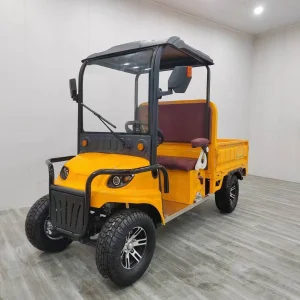
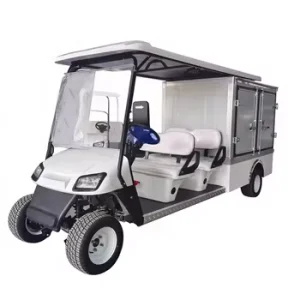
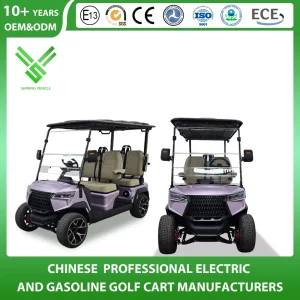
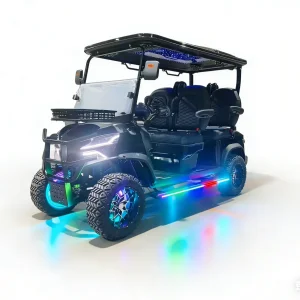
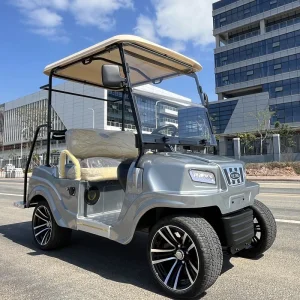
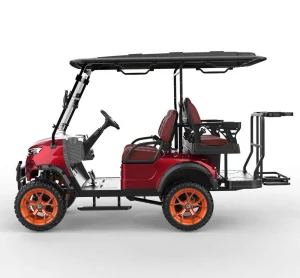
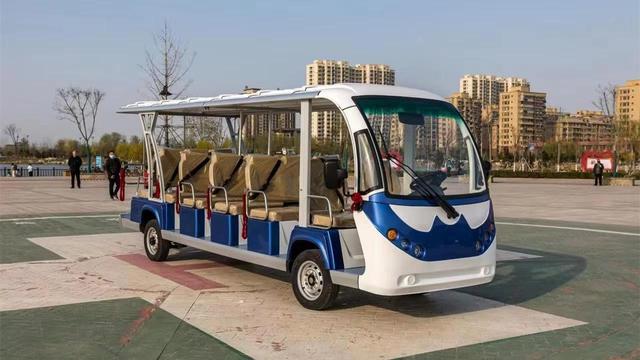
In the contemporary landscape of micro-mobility and commercial guest services, CE Certified VIP transport carts have evolved far beyond the limits of standard recreational golf buggies. Today, they represent high-performance, emissions-free transport configurations specifically engineered for commercial guest conveyance, high-density industrial transport, and airport terminal transit. Global corporate buyers, premium resorts, municipal parks, and manufacturing facilities are driving demand for customized mobility vehicles that meet strict environmental, safety, and reliability metrics.
This industry-wide shift from internal combustion engines (ICE) to smart lithium-ion electric drivetrains is highly aligned with international ESG (Environmental, Social, and Governance) targets. Modern fleets must offer seamless passenger comfort while operating with whisper-quiet noise levels and zero direct emissions. In response, top manufacturers are incorporating high-efficiency brushless AC motors, sophisticated digital control systems (such as programmable Curtis controllers), and automotive-grade chassis structures to ensure that these vehicles withstand rigorous commercial workloads.
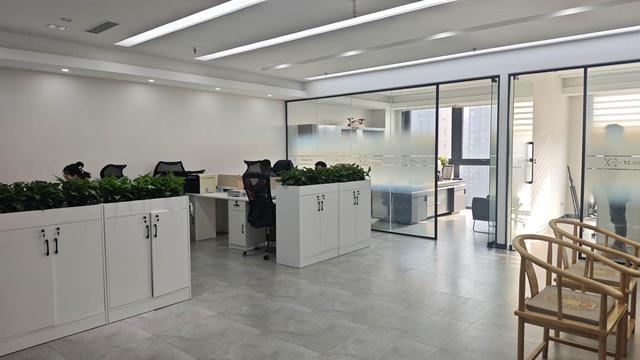
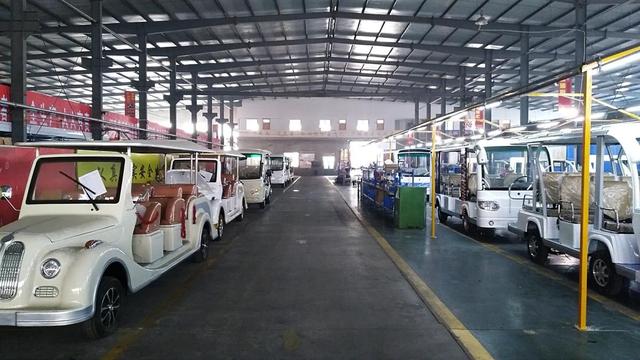
Founded in 2014 and strategically headquartered in the technology hub of Shenzhen, Guangdong, China, Shenzhen Kabar Golf Co., Ltd. is a leading manufacturer specializing in the research, development, and global export of electric golf carts, multi-passenger VIP resort shuttles, and customized commercial utility vehicles. Operating out of a state-of-the-art 18,000 square meter production facility with a dedicated workforce of over 220 highly skilled technicians, the company delivers high-value mobility systems to golf courses, international airports, luxury hotel groups, gated communities, and heavy-industry sites worldwide.
For B2B procurement professionals in Europe, Oceania, and the Americas, compliance is non-negotiable. A CE certification verifies that a VIP transport vehicle satisfies all relevant European Union safety, health, and environmental protection directives. Specifically, these electric vehicles undergo rigorous tests for electromagnetic compatibility (EMC), low-voltage electrical systems, high-stress braking efficiency, and mechanical chassis integrity.
Without standard CE certification, importers and fleet managers face significant legal barriers, insurance invalidation, and operational risks. Shenzhen Kabar Golf Co., Ltd. implements quality management systems covering the full assembly cycle, ensuring that every vehicle shipped complies with international CE and DOT parameters. This meticulous approach ensures seamless compliance during customs clearance and provides long-term operational safety.
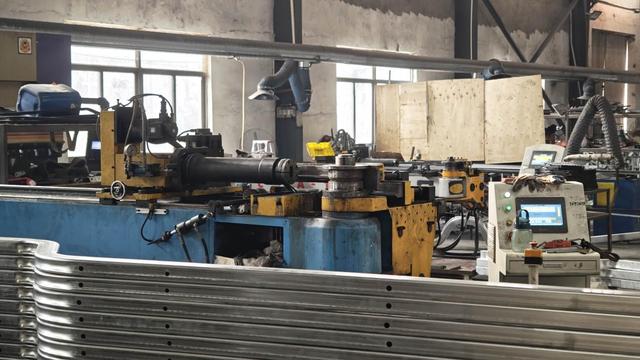
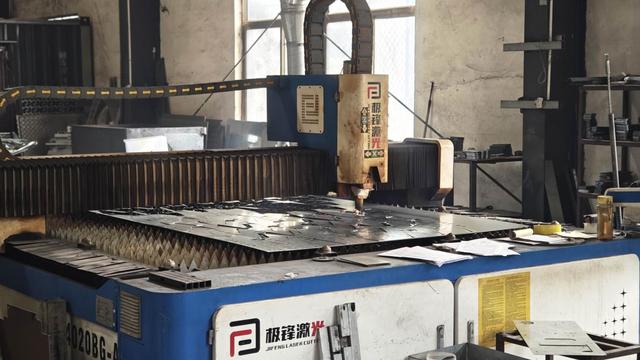
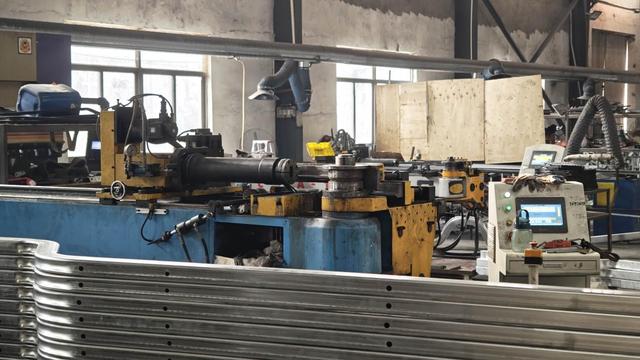
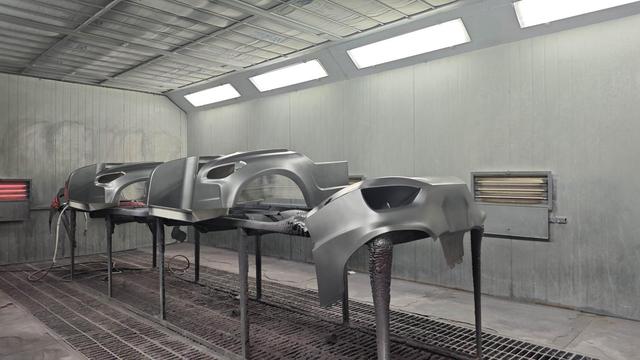
Purchasing directly from China's premier industrial cluster in Guangdong offers major strategic advantages. The Pearl River Delta is the world's leading ecosystem for electric vehicle components, battery cell manufacturing, and advanced metal fabrication. By leveraging these local resources, Shenzhen Kabar Golf Co., Ltd. integrates high-end engineering with competitive costs. This enables rapid custom design turnarounds, advanced robotic structural welding, and rigorous performance testing that would be cost-prohibitive in Western markets.
A comparative overview of electric vehicle architectures designed for VIP transport and utility operations.
| Performance Specification | Lithium-Ion (LiFePO4) Powertrain | Lead-Acid (Deep Cycle) Powertrain | Commercial Advantage & ROI |
|---|---|---|---|
| Energy Density & Cell Life | High density, 3500+ charge cycles | Standard density, 500-800 cycles | Lithium delivers a lower Total Cost of Ownership (TCO) over 5 years. |
| Charging Efficiency | Fast charging (2-4 hours to 100%) | Standard charging (8-10 hours) | Enables rapid turnaround and multi-shift operation. |
| Overall Vehicle Weight | Reduces battery weight by up to 60% | Heavy battery load, impacts payload | Improves range, braking responsiveness, and minimizes turf wear. |
| Maintenance Profile | Zero maintenance, smart BMS monitoring | Requires regular water refills & terminal cleaning | Significantly reduces onsite labor and maintenance overhead. |
| Environmental Impact | Highly recyclable, zero hazardous heavy metals | Contains hazardous lead, higher recycling risk | Supports corporate ESG mandates and carbon-neutral policies. |
Understanding where and how these transport configurations are deployed is key to selecting the right model:
Purchasing managers must carefully review the technical specifications of their electric vehicle fleet to ensure it meets long-term demands. Key features to evaluate include:
Vehicles operating in coastal resorts face salt air corrosion, while industrial carts encounter harsh chemicals. Selecting a chassis built with aerospace-grade hot-dip galvanized steel or powder-coated aluminum prevents rust and structural fatigue. An engineered independent double A-arm front suspension, paired with rear leaf springs and hydraulic dampers, ensures stability and passenger comfort even under full loads.
For flat golf courses, a 3KW AC motor is highly efficient. However, rugged terrains, hilly resorts, or heavily loaded utility carts require 5KW to 7.5KW AC brushless motors. These advanced motors deliver higher torque, dynamic regenerative braking (which recharges the battery during downhill deceleration), and lower thermal wear, resulting in reduced maintenance costs.
The core of any modern electric utility vehicle is its battery pack. A smart BMS protects cells from overcharging, deep discharging, thermal runaway, and short circuits. Integrating CAN-bus communication protocols allows technicians to monitor battery health, individual cell voltages, and run real-time diagnostics directly from the dashboard screen.
By investing in these engineering features, businesses can build highly reliable fleets that lower operational costs and keep their facilities running efficiently.
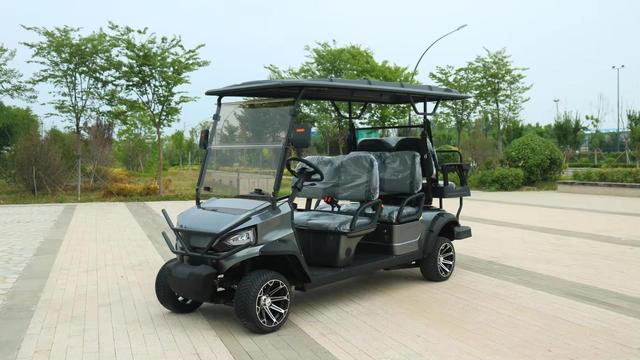
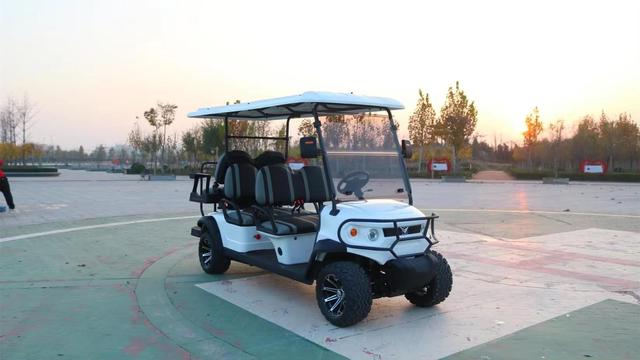
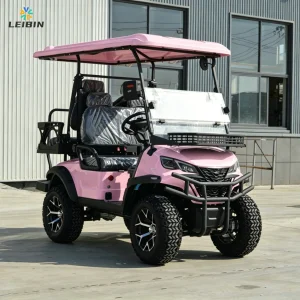
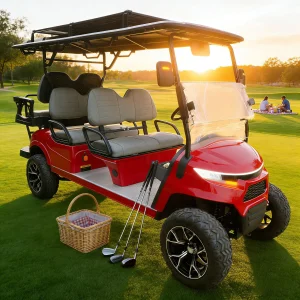
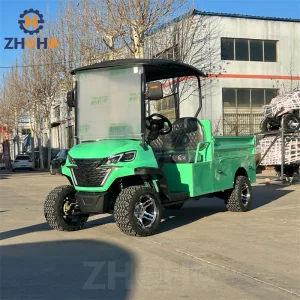
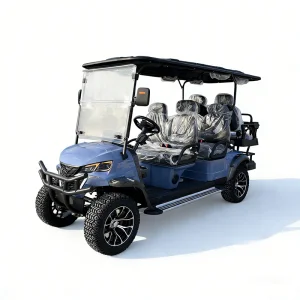
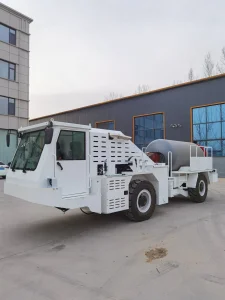
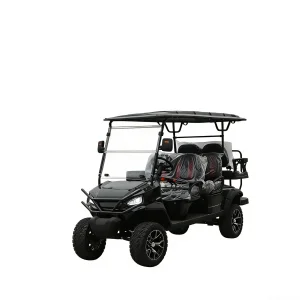
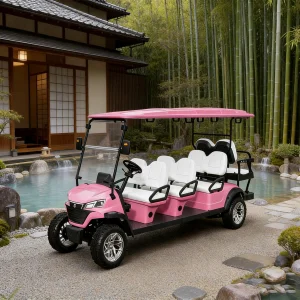
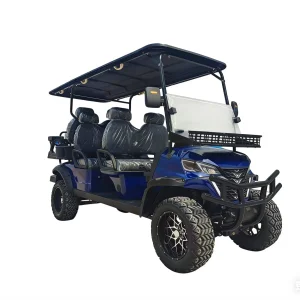
Discover our advanced multi-passenger vehicles, off-road electric carts, and specialty industrial transport options.
Get expert answers to technical, logistics, and certification questions regarding electric utility vehicles.
For standard configurations, the production timeline at our Shenzhen factory ranges between 15 to 20 business days. For customized OEM/ODM projects requiring structural modifications, specialized paint formulations, or complex configurations, the typical lead time is 25 to 35 business days. Once production is complete, we run full electrical, battery, and safety tests before packing the vehicles for transport.
CE certification ensures compliance with European Union directives, including the Machinery Directive, Electromagnetic Compatibility (EMC), and the Low Voltage Directive (LVD). This facilitates smooth customs clearance within the EU. For US markets, DOT certification is essential for street-legal low-speed vehicles (LSVs), verifying that safety components like tires, glass, seatbelts, and lighting systems comply with FMVSS standards.
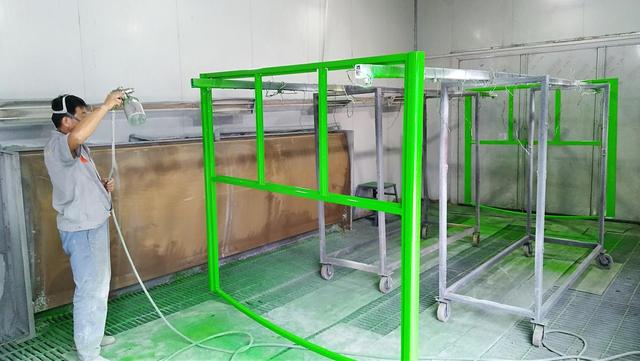
Yes, we provide full OEM and ODM services. Buyers can select specific RAL paint colors, add corporate logos, choose custom seat upholstery materials, and add practical accessories like heavy-duty utility beds, rain enclosures, integrated coolers, or roof-mounted solar panels.
Our high-grade lithium iron phosphate (LiFePO4) battery packs are designed to last for over 3,500 complete charge/discharge cycles while retaining at least 80% of their original capacity. This equates to roughly 8 to 10 years of reliable service under normal operating conditions. This performance significantly outlasts traditional lead-acid batteries, which typically require replacement within 2 to 3 years.
 Kabar Golf