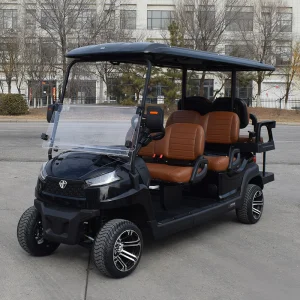
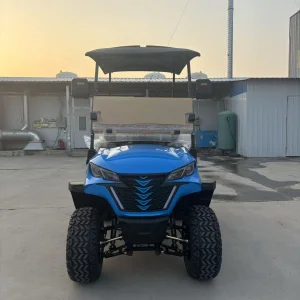
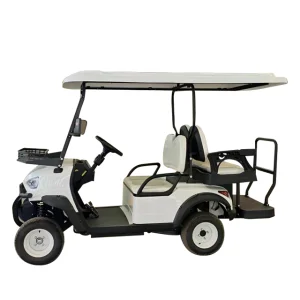
Costa Rica is leading the global green transition. As the country aims for net-zero carbon emissions, street-legal low-speed electric vehicles (LSVs) have evolved from recreational novelties to critical components of urban, resort, and residential infrastructure.
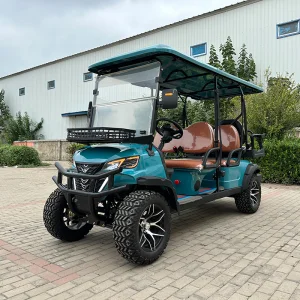
Standard fleet carts often fail in Costa Rica due to steep inclines, heavy rainfall, high humidity, and saline coastal air. Here is how Kabar Golf designs systems to survive and excel.
Built with hot-dip galvanized or aerospace-grade aluminum frames, specifically treated to prevent rust in high-salinity beachfront areas like Guanacaste, Manuel Antonio, and Jaco.
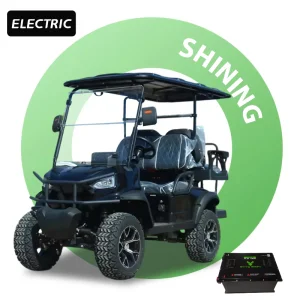
High-discharge LiFePO4 battery packs equipped with localized Battery Management Systems (BMS) to handle deep discharges, high ambient tropical temperatures, and fast charging cycles.
Equipped with 3.5KW to 7.5KW AC motors and matching heavy-duty controllers, providing the torque required to ascend 25%+ steep gravel slopes and mountain roads in Costa Rican eco-resorts.
Costa Rica’s National Decarbonization Plan (Plan Nacional de Descarbonización 2018-2050) has set ambitious targets to transition transportation fleets away from fossil fuels. While public transit and passenger cars occupy much of the national discourse, micro-mobility—specifically Low-Speed Vehicles (LSVs) and street-legal golf carts—plays a vital role. In regions like Guanacaste (including Las Catalinas, Tamarindo, and Nosara), Manuel Antonio, Santa Teresa, and Papagayo, utility vehicles are no longer confined to golf courses. They are utilized as the primary mode of transportation for tourists, property managers, municipal workers, and local residents.
This macro transition demands vehicles that conform to safety guidelines while preserving the pristine environment. Unlike gas-powered alternatives, high-performance electric golf carts produce zero tailpipe emissions and minimal noise pollution, protecting Costa Rica's rich biodiversity. By choosing lithium-powered LSVs, commercial operations, boutique hotels, and residential estates directly align themselves with the nation's ecological brand image, capturing "information gain" in their sustainability reporting and marketing efforts.
Navigating the legal framework of the Ministry of Public Works and Transport (MOPT) and the roadworthiness agency (such as DEKRA / RTV) is essential for any importer, distributor, or fleet operator in Costa Rica. To obtain license plates (placas) and travel legally on secondary and public roads, electric golf carts must transition into the category of "Low-Speed Vehicles" (LSVs) or light quadricycles. This transition requires specific hardware modifications:
Shenzhen Kabar Golf Co., Ltd. customizes vehicles at the factory level to ensure they comply with these street-legal configurations before shipping, bypassing the need for expensive aftermarket modifications in Costa Rica.
Shenzhen Kabar Golf Co., Ltd. (established in 2014) operates at the center of the world's most advanced hardware ecosystem. From our 18,000-square-meter modern production facility in Shenzhen, Guangdong, China, we leverage a robust local supply chain to deliver high-quality electric mobility solutions. By controlling the design, assembly, and testing of our utility vehicles, we provide substantial advantages over localized assembly shops:
Lithium Battery Superiority (LiFePO4): We source Grade-A lithium iron phosphate cells, integrating them with smart BMS controllers. This chemistry provides superior thermal stability, over 3,500 charging cycles, and zero maintenance, outperforming traditional lead-acid batteries in Costa Rica's tropical climate.
Advanced Engineering and R&D: With over 220 skilled workers and an experienced engineering team, Kabar Golf invests continuously in vehicle innovation. We offer comprehensive OEM/ODM services, including vehicle customization, branding, color matching, seating configurations (from 2-seater utility models to 22-seater sightseeing buses), and integrated solar panel options.
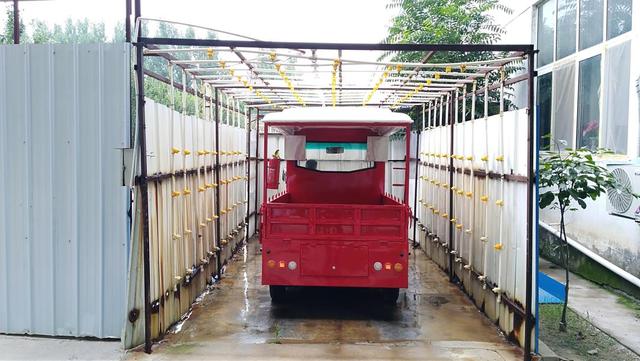
Strict Quality Management: Quality control is integrated into every phase of our manufacturing process. Every vehicle undergoes a rigorous multi-point inspection, including brake testing, suspension alignment, insulation resistance checks, and waterproof testing before export, ensuring compliance with international CE and EEC standards.
The versatility of Kabar Golf's street-legal electric vehicle lineup enables diverse applications across various Costa Rican micro-climates and industries:
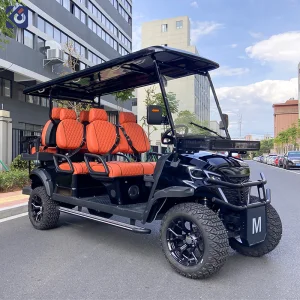
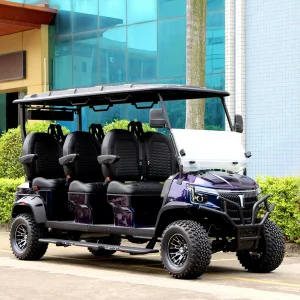
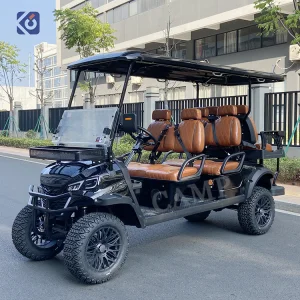
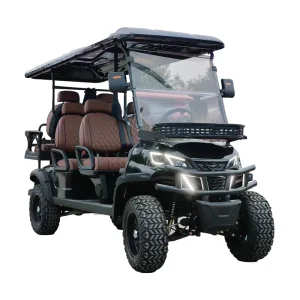
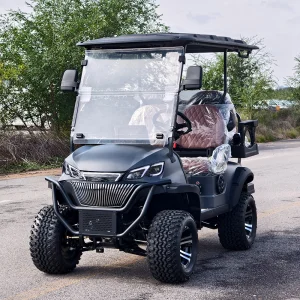
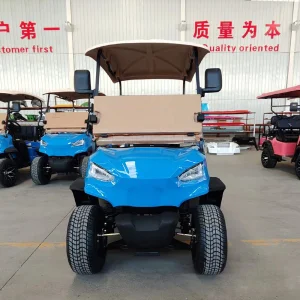
Eco-Resorts & Hospitality (Guanacaste & Papagayo): Luxury resorts require silent, premium guest transportation. Our 4-seater and 6-seater lithium golf carts operate quietly, carrying guests and luggage up steep resort paths without disturbing the natural surroundings.
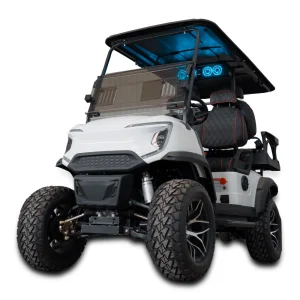
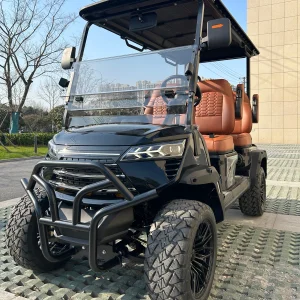
Gated Coastal Communities (Las Catalinas & Nosara): Car-free and low-emissions communities utilize street-legal LSVs as their primary mode of transportation. Our lifted off-road models feature rugged suspension systems to navigate unpaved roads and dirt paths common in coastal areas.
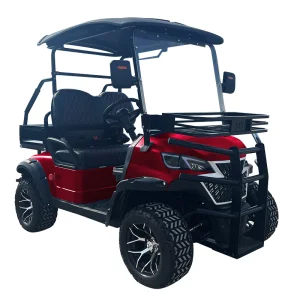
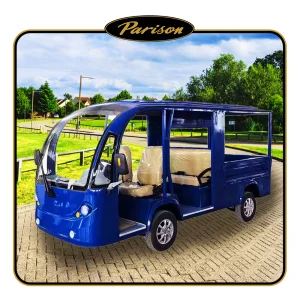
Industrial Parks & Free Trade Zones (Alajuela & Heredia): Large logistics centers and manufacturing facilities use our heavy-duty utility and cargo carts to move tools, maintenance crews, and parts across extensive facilities cleanly and efficiently.
Agricultural Logistics & Conservation Areas: With payload capacities reaching up to 500kg, our electric UTVs and utility carts assist research centers, eco-lodges, and sustainable farms in carrying supplies over rough terrain with minimal soil compaction and zero oil-spill risks.
To withstand Costa Rica’s steep topography and coastal moisture, Kabar Golf prioritizes high-spec components:
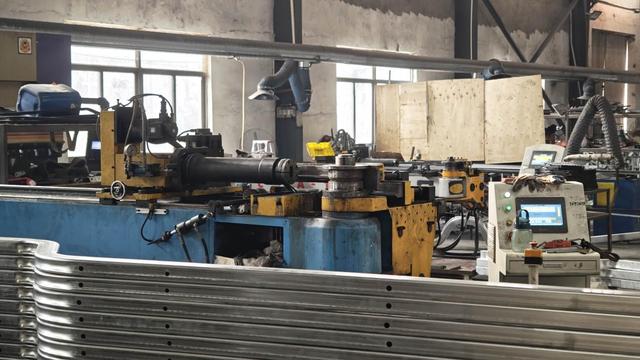
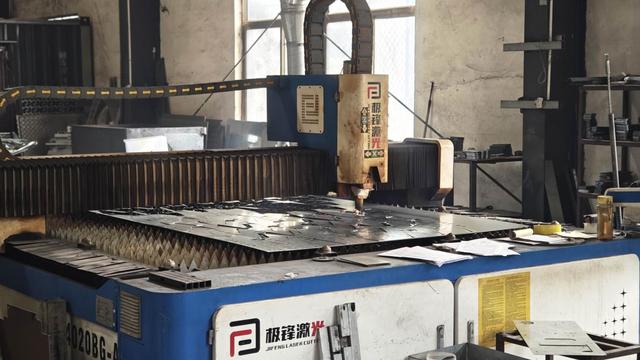
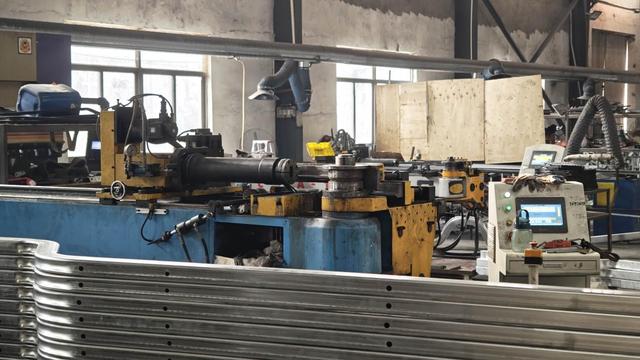
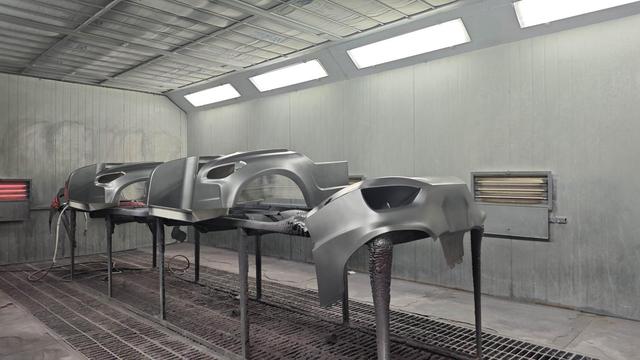
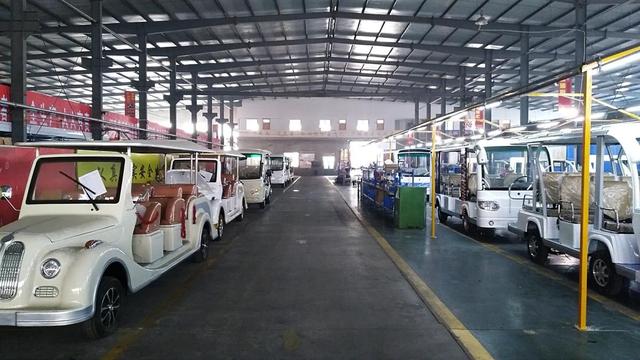
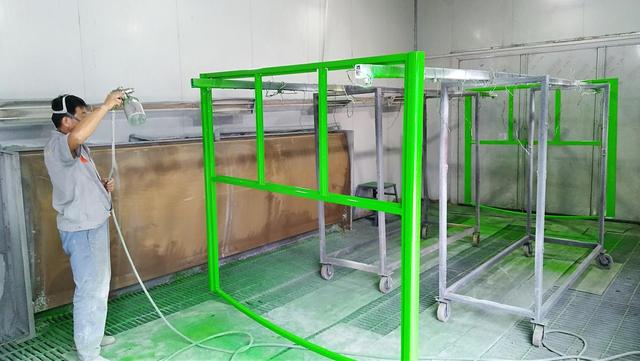
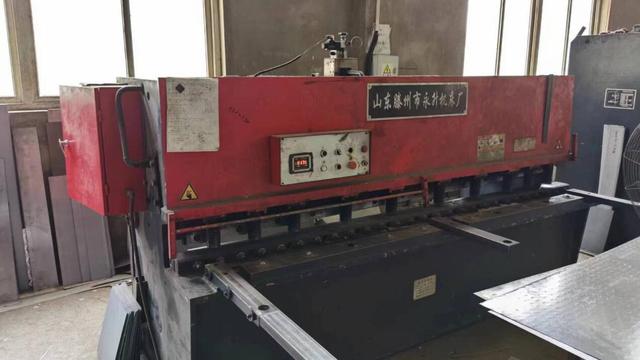
Inside our advanced production line: checking tolerances, testing electronics, and preparing street-legal vehicles for global shipment.
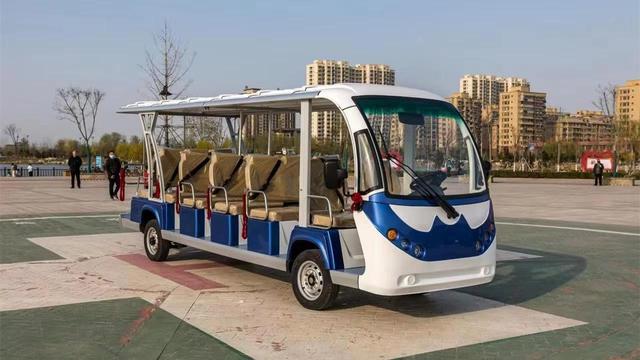
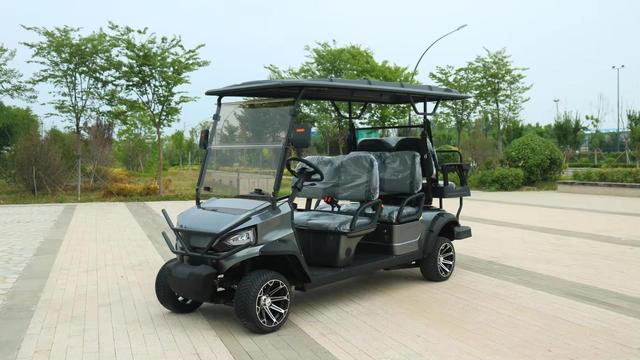
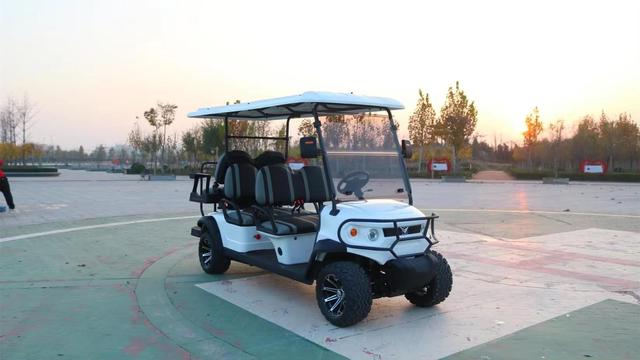
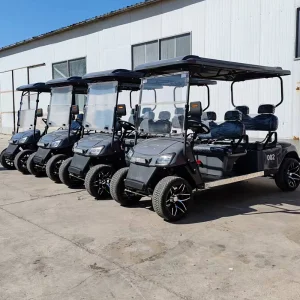
Select from our range of street-legal passenger, utility, and customized electric vehicles designed to meet Costa Rican commercial and private needs.
Purchasing street-legal electric golf carts directly from the manufacturer requires structured logistical coordination to manage transit schedules and minimize local import costs. Kabar Golf has developed a specialized export pipeline to major Costa Rican maritime terminals:
Ocean Freight Routing: Shipping routes originate from the Port of Shenzhen (Yantian or Shekou) to major regional gateways. Cargo heading to Costa Rica's Pacific coast—including communities in Guanacaste, Puntarenas, or the Osa Peninsula—typically transits to Puerto Caldera. Cargo destined for the Central Valley or Caribbean side ships to Puerto Limón / Terminal de Contenedores de Moín (TCM). Average transit times range between 28 and 38 days, depending on transshipment connections in Mexico or Panama.
Container Maximization (CKD vs. SKD): To optimize container space and reduce freight costs per unit, we offer flexible shipping configurations. Vehicles can be shipped Semi-Knocked-Down (SKD)—requiring minimal assembly of wheels, roofs, and batteries—or Completely Knocked-Down (CKD) for high-volume distributors possessing local assembly capabilities. SKD configurations allow us to fit more units per 40ft High Cube container, reducing freight costs by up to 30% per vehicle.
Customs Clearance Support (Import Tariffs): Under Costa Rican customs guidelines, electric vehicles benefit from specific tax incentives (Ley de Incentivos y Promoción para el Transporte Eléctrico N° 9518). Importers can secure exemptions or reductions on select duties, such as the Selective Consumption Tax (Impuesto Selectivo de Consumo) and customs processing fees, depending on the vehicle's design and configuration. Kabar Golf provides a full suite of export documentation—including Bill of Lading (B/L), Commercial Invoice, Detailed Packing List, Certificate of Origin, and CE/EEC Certifications—to help local brokers clear shipments efficiently.
Expert answers to common questions about importing, registering, operating, and maintaining street-legal electric golf carts in Costa Rica.
Yes. To register a vehicle for public road use, it must be imported as a Low-Speed Vehicle (LSV) or light quadricycle, equipped with a manufacturer-issued 17-digit VIN, safety windshield, seatbelts, wipers, mirrors, and a complete lighting system. Kabar Golf designs models with these specific configurations to assist with local MOPT and DEKRA certification.
Our Grade-A Lithium Iron Phosphate (LiFePO4) battery packs are highly suited for tropical climates. Unlike traditional lead-acid batteries, they do not require water maintenance, tolerate higher operating temperatures without degradation, and are monitored by an integrated BMS that protects against overcharging and thermal runaway.
Yes. For hilly terrains, we recommend models equipped with our 5KW or 7.5KW AC brushless motors paired with high-torque gearboxes and high-output Curtis controllers. This setup provides strong climbing ability (negotiating slopes over 25%) and benefits from regenerative braking, which helps control descents while recharging the battery.
Depending on the battery size (typically 105Ah to 210Ah configurations) and terrain, our lithium golf carts offer a range of 70km to 120km per charge. Regenerative braking and optional roof-mounted solar panels can further extend this range during daily operations.
Our standard manufacturing lead time is 15 to 25 days, depending on customization options and order size. Ocean transit from Shenzhen to Puerto Caldera or Puerto Limón typically takes 28 to 38 days. In total, expect delivery within 45 to 65 days from order confirmation.
Yes. Under the Ley de Incentivos y Promoción para el Transporte Eléctrico, 100% electric vehicles receive variable tax exemptions on selective consumption taxes and customs values. We recommend working with a registered Costa Rican customs broker to apply these incentives to your import documentation.
We construct our frames using hot-dip galvanized steel or rust-proof aluminum. Exposed hardware utilizes stainless steel, and electronic connectors are sealed to help protect components from salt spray and humidity in coastal resort areas.
Yes. We provide comprehensive OEM and ODM services. We can customize body colors to match corporate branding, apply custom logos, configure seat arrangements, and install specialized cargo beds or utility racks at the factory.
We offer a 12-month factory warranty on core components, including the lithium battery, AC motor, chassis, and controller. We maintain a dedicated stock of spare parts (such as tires, brake pads, switches, and windshields) and can ship replacement parts quickly to minimize vehicle downtime.
Our lithium golf carts plug into standard 110V or 220V electrical outlets. Onboard smart chargers regulate the electrical flow, automatically shutting off when the battery is full. A typical full charge takes 4 to 6 hours on a 220V outlet, while opportunistically topping up during lunch breaks or between runs is also safe for the lithium cells.
Partner with Shenzhen Kabar Golf Co., Ltd. for factory-direct prices, customized configurations, and reliable lithium performance engineered for Costa Rica's unique terrain.
Send Inquiry Now Kabar Golf