Why are electric golf carts becoming popular? The answer starts with an ordinary scene: a cart gliding quietly past homes, resorts, and golf-course greens, with no tailpipe fumes at the point of use. For many buyers, that quiet ride is not a luxury detail. It makes short trips feel easier, whether they are carrying clubs, groceries, or maintenance tools. Electric models can also have lower routine energy and maintenance costs than comparable gas-powered carts, though savings depend on local electricity prices, battery condition, and use.
Transportation researcher Daniel Sperling studies how mobility systems can become cleaner and more practical. A contextual paraphrase of that broader perspective is: “Cleaner transportation works best when it fits real trips and daily routines.” It is not a golf-cart-specific quotation, but it helps explain the appeal: these vehicles suit short, repeated journeys where speed and long range matter less than convenience. Quiet. Simple. Useful.
There are trade-offs, too. Batteries eventually need replacement, charging takes planning, and range can fall with hills, cold weather, heavy loads, or age. Buyers should check battery type, service availability, charging access, and the cart’s intended use before deciding. A neighborhood cart is not automatically right for every household. That part is easy to overlook. This article explores the practical reasons electric golf carts are gaining attention, from operating costs and quieter travel to everyday utility—and the limitations worth weighing before purchase.
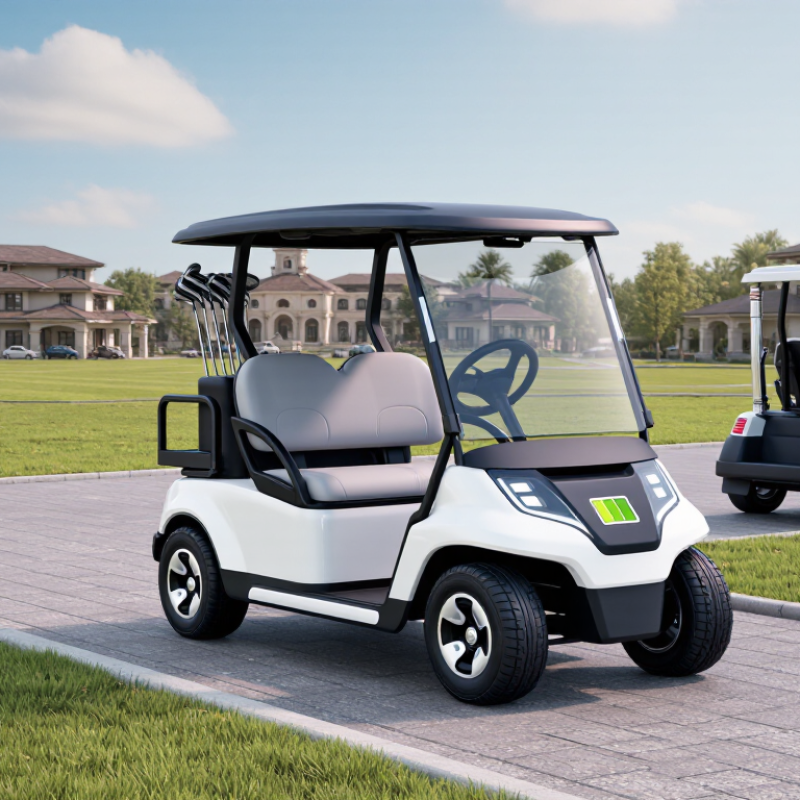
Electric golf carts run on a battery pack, controller, and electric motor. The battery supplies direct-current power, while the controller adjusts how much reaches the motor when the driver presses the pedal. Lead-acid batteries are often less expensive upfront; lithium-ion packs are lighter and typically charge faster, but cost more. Charging time depends on battery size, charger output, and how depleted the pack is. Plug in after use. Keep charging connections dry, and follow the manufacturer’s instructions.
Their appeal goes beyond the golf course. Carts can carry tools around large properties, move guests at resorts, and handle short trips in planned communities. Grand View Research estimated the global golf-cart market at about $1.9 billion in 2023, with a projected 5.8% annual growth rate from 2024 to 2030. That is a market estimate, not proof that every cart is electric or equally efficient. Quiet operation helps in shared spaces. Still, a quiet ride is not automatically a low-impact one: electricity sources, battery production, and pack lifespan matter. A cart used for brief trips may fit well; for longer routes, range and charging access deserve a closer look.
| Topic | Typical Details | Why It Matters |
|---|---|---|
| Battery voltage | Many carts use a 36- or 48-volt battery system. The exact configuration depends on the vehicle. | Voltage is one factor that determines how the motor and electrical system are designed. |
| Battery types | Lead-acid and lithium-ion batteries are common options. Their weight, maintenance needs, cost, and charging characteristics differ. | Buyers can choose between established battery technology and a lighter option that may require less routine maintenance. |
| Electric motor | The motor converts electrical energy from the battery into motion. Power and performance vary by cart design and intended use. | An electric drivetrain provides smooth acceleration and has fewer routine service items than a small gasoline engine. |
| Charging | Carts are typically charged using a compatible charger connected to a suitable power outlet. Charging time depends on battery chemistry, capacity, charger output, and battery state. | Charging at a regular parking location can make daily use convenient, but users should follow the vehicle and battery maker’s instructions. |
| Driving range | Range varies substantially with battery condition, terrain, passenger and cargo weight, speed, temperature, and driving habits. | A realistic range estimate helps determine whether a cart suits a golf course, property, or other daily route. |
| Noise and local emissions | An electric cart produces no tailpipe emissions while operating and is generally quieter than a comparable gasoline-powered cart. | Quiet operation can be useful in residential areas, resorts, campuses, and other places where noise is a concern. Electricity generation and battery production still have environmental impacts. |
| Routine upkeep | Maintenance commonly includes checking tires, brakes, steering, and electrical connections. Lead-acid batteries may also require model-specific care. | Fewer engine-related service tasks can make electric carts appealing for frequent short trips. |
| Core uses | Common settings include golf courses, resorts, campuses, planned communities, farms, and large private properties. | Their compact size and low-speed operation suit many short-distance trips on appropriate private roads or designated paths. |
| Road-use rules | Whether a cart may be driven on public roads depends on local laws, vehicle equipment, speed limits, and registration requirements. | Always check local rules before using a cart outside private property or designated areas. |
Note: Specifications and operating costs vary by vehicle, battery, location, and usage. Check the owner’s manual and local regulations for model-specific guidance.
A battery supplies direct-current power. A controller adjusts power to the electric motor when you press the pedal.
Lead-acid batteries often cost less upfront. Lithium-ion packs are lighter and typically charge faster, but cost more.
It depends on battery size, charger output, and how depleted the pack is. Plug in after use, keep connections dry, and follow the maker’s instructions.
They can carry tools across large properties, move resort guests, and handle short trips in planned communities. Quiet operation can help in shared spaces.
Not automatically. Electricity sources, battery production, and battery lifespan all matter. A short trip may suit a cart; longer routes need more planning.
The article gives two estimates: about $1.9 billion and $2.14 billion. Both cover golf carts broadly, not electric models alone. The figures do not match, so they deserve checking.
No. In the United States, a four-wheeled vehicle traveling above 20 mph and no faster than 25 mph may meet the low-speed vehicle definition. Applicable safety standards and local rules matter.
Check the vehicle’s classification, required safety equipment, local registration rules, and permitted roads. A posted speed limit alone is not enough. Weather, hills, range, and passenger weight can change performance. A sunny test drive may not tell the whole story.
Electric golf carts use rechargeable batteries to power an electric motor, making them suitable for quiet, convenient travel around courses and other nearby areas. Their popularity reflects both practical benefits and growing demand: the golf cart market was valued at $2.14 billion in 2023, while 26.6 million people played golf on U.S. courses that year. For many operators and owners, electric power can reduce fuel use and routine maintenance needs compared with gas-powered alternatives. Charging the battery is a straightforward part of ownership, though range and charging time depend on the vehicle and its use.
So, why are electric golf carts becoming popular beyond the golf course? Their compact size, quiet operation, and ability to serve short-distance trips make them useful in suitable communities and other settings. In the United States, low-speed vehicles are defined by a maximum speed of 25 mph and a capability of more than 20 mph. Together, expanding uses, operating advantages, and strong golf participation help explain the appeal of electric carts.

 Kabar Golf