Choosing the right golf cart certification can feel confusing, especially when requirements change by location, vehicle type, and intended use. Many owners ask, “what certifications are required for golf carts?” The answer depends on whether the cart stays on private property, operates at a golf course, or travels on public roads.
This guide explains the main credentials and training areas buyers, operators, and fleet managers should examine. Golf course employees may need documented operator training, workplace safety instruction, and manufacturer-specific guidance. Commercial users should also review inspection records, battery-handling procedures, passenger limits, and emergency practices. A certificate alone does not prove safe operation.
Local rules matter most.
Road-legal carts may require a valid driver’s license, registration, insurance, approved lighting, seat belts, mirrors, and other required equipment. However, these conditions differ across states, cities, and road classifications. Some workplaces also require refresher training after an incident or when equipment changes. That practical detail is easy to overlook.
Reliable compliance starts with official sources. Check your transportation department, workplace safety authority, employer policies, and the cart manufacturer’s manual. Experienced fleet supervisors can also reveal problems that paperwork misses, such as weak brakes, damaged tires, or poor battery ventilation. This article focuses on the certifications, training records, and safety checks most commonly connected with golf carts. It also acknowledges an important limitation: no single certificate covers every use case. Requirements can change, and assumptions can create risk.
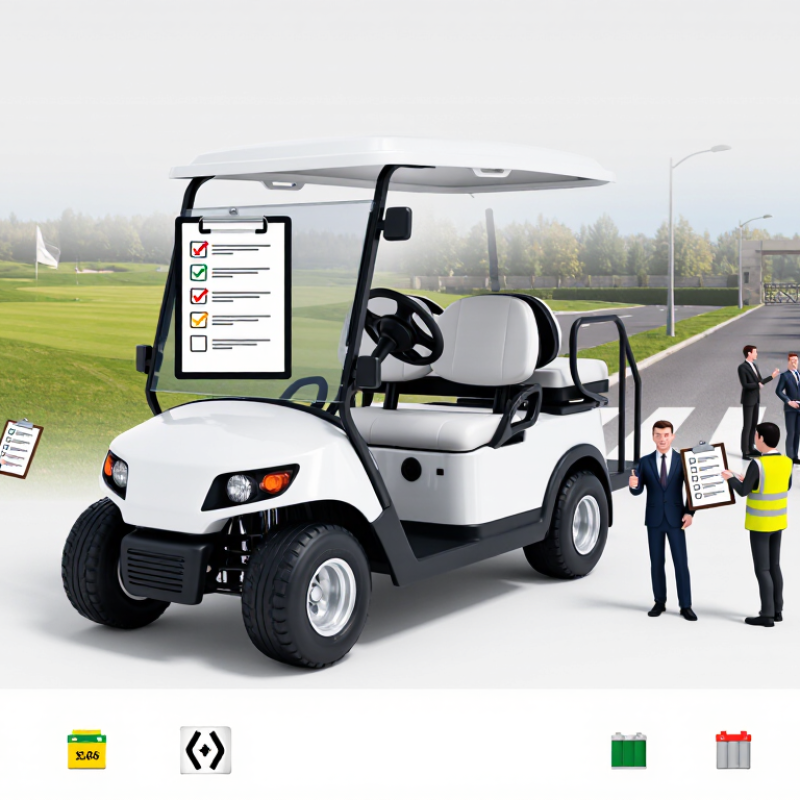
Golf Cart Certification Requirements by Role and Work Environment
Top Certifications Required for Golf Carts
Golf Cart Certification Requirements by Role and Work Environment
Certification needs change with the worker’s role, cart design, and workplace risks. A rental attendant usually needs documented operator training, a practical driving assessment, and basic emergency procedures. Training should cover braking, steering, passenger limits, charging areas, and pedestrian awareness. Short sessions help, but rushed instruction can leave dangerous gaps.
Technicians need deeper credentials.
Their training should include electrical safety, battery handling, lockout procedures, brake inspection, and fault diagnosis. A recognized electrical safety course may be required for high-voltage systems. First-aid certification is also valuable in maintenance shops and busy facilities. Service records should show the trainee’s name, assessment date, instructor, and renewal schedule.
The environment matters just as much.
Resort staff may need traffic-control training and guest-safety procedures. Campus or warehouse operators may require site-specific vehicle training, visibility rules, and incident reporting. Public-road use can involve separate local licensing or registration requirements. These rules differ by location, so managers should verify them with the relevant authority.
I would not treat a generic online certificate as complete proof of competence.
It may explain controls but never test real judgment. A worker can pass a quiz and still brake too late near a crowded walkway. Regular observations, refresher training, and signed inspections provide stronger evidence. Even careful programs miss details, especially when carts are modified or used outside their original setting.
Core Safety Certifications for Golf Cart Operators
Top Certifications Required for Golf Carts
Core Safety Certifications for Golf Cart Operators
Golf-cart operators need practical training, not just a driving permit. A recognized operator-safety course should cover inspections, pedestrian awareness, braking, turning, parking, and battery charging. Training aligned with ANSI/ITSDF B56.8 can strengthen workplace procedures for personnel and burden carriers. OSHA identifies motor-vehicle incidents as a leading cause of occupational fatalities, so site-specific instruction matters.
First-aid and CPR certification adds another important layer. Operators may work near water, traffic, steep paths, or crowded facilities. The U.S. Consumer Product Safety Commission has repeatedly estimated more than 15,000 golf-cart-related injuries requiring emergency treatment each year. That figure should not be ignored. In my experience, many preventable incidents begin with simple mistakes, such as carrying extra passengers or driving too quickly on a slope. A certificate cannot replace judgment.
Tips: Require a short pre-shift inspection. Check tires, steering, brakes, lights, mirrors, seat belts, and warning alarms. Keep a written inspection log. Refresh training after any collision, near miss, equipment change, or long absence. Supervisors should observe real driving conditions, not only classroom performance. A small weakness can become serious. Consider adding defensive-driving training, especially for operators working around pedestrians and delivery vehicles. Some programs still overlook reversing technique, which deserves more attention.
Technical Certifications for Golf Cart Maintenance and Repair
Reliable golf cart maintenance begins with technical training, not guesswork. Electricians should earn a recognized certification in low-voltage electrical systems. This credential teaches circuit testing, wiring faults, charging systems, and safe isolation procedures. Battery technology certification is also valuable, especially for carts using lithium-based power systems. Technicians learn cell balancing, thermal risks, connector inspection, and correct storage methods.
Tips: Choose courses with practical assessments. Look for training that includes multimeter testing, battery diagnosis, brake adjustment, and steering inspection. Keep digital records of certificates and completed repair work. A short refresher course can prevent expensive mistakes.
A strong technician may also hold certifications in mechanical maintenance, workplace safety, and emergency first aid. These areas support safer repairs around moving parts, stored electrical energy, and heavy batteries. Certification requirements vary by location and workplace, so applicants should verify local rules before accepting technical duties. In real workshop conditions, a certificate alone does not guarantee accurate work. Loose terminals, damaged insulation, and incorrect torque settings can still be missed. Practical supervision matters. A useful assessment should require the technician to identify a fault, explain the repair, and test the cart afterward. Some training programs feel too classroom-based, and that limitation deserves attention. Experienced technicians should continue learning through service manuals, inspection checklists, and measured testing rather than relying on memory.
Top Certifications Required for Golf Carts
Technical Certifications for Golf Cart Maintenance and Repair
There is no single universal certification required for every golf cart technician.
The most relevant credentials depend on the vehicle’s battery system, electrical design,
workplace risks, and whether refrigerant-based air-conditioning equipment is serviced.
The chart uses a practical relevance index from 1 to 5, not a legal requirement ranking.
Specialized Certifications for Electric and Gas-Powered Golf Carts
Golf cart technicians need different certifications for electric and gas-powered systems. Electric carts require training in low-voltage electrical safety, battery maintenance, charging systems, and motor controllers. A recognized electrical safety course can help technicians identify damaged cables, exposed terminals, and unsafe charging conditions. Battery handling training is also valuable, especially when carts use heavy rechargeable units. Workers should understand short-circuit risks, protective equipment, ventilation, and correct lifting methods.
Gas-powered carts require small-engine certification or documented training. This usually covers fuel delivery, ignition systems, exhaust components, oil changes, and engine troubleshooting. Fire prevention training adds important protection during fuel-system repairs. Some technicians also benefit from courses in welding, brake inspection, and workplace hazard control. Certification requirements can vary by region and employer. Confirm them with local regulators before assigning technical work.
Tips: Keep digital records of certificates and renewal dates. Match each course to the cart’s power system. Never treat informal experience as complete training. A technician may repair ten carts successfully, yet still miss one battery fault. Practical testing, supervised repairs, and regular refresher lessons reveal those gaps. In my view, this is where many maintenance programs remain imperfect. Safety improves when certification supports careful habits, not just paperwork.
How to Choose, Obtain, and Maintain the Right Certification
Top Certifications Required for Golf Carts
Choosing the right golf cart certification starts with its intended use. A maintenance certificate suits technicians who inspect batteries, brakes, steering, and charging systems. A safety-operation certificate may fit staff driving carts on private courses, resorts, or large properties. Requirements differ by location, so confirm current rules with a recognized training provider or local authority. Do not trust an old checklist.
Obtaining certification usually involves classroom instruction, practical testing, and a final assessment. Expect questions about electrical isolation, battery acid exposure, tire pressure, passenger limits, and emergency procedures. During practical training, inspect a cart with the power disconnected. Check loose terminals, worn cables, damaged guards, and weak brakes. One missed cable can create a serious hazard. I have found that rushed inspections often overlook small cracks near mounting points.
Tips: Choose a course with hands-on testing, qualified instructors, and clear renewal dates. Keep your certificate, training record, inspection sheets, and repair notes together. Schedule refresher training before certification expires. Standards can change. Your memory can change too. After each service, record battery condition, brake response, steering play, and unusual sounds. A short test drive on a controlled surface can reveal problems that paperwork misses. If a cart fails inspection, remove it from service until a competent technician completes and documents the repair.
FAQS
They should complete a recognized operator-safety course. Training should cover inspections, braking, turning, parking, pedestrians, and battery charging. A permit alone is not enough.
Yes. Operators may work near water, traffic, steep paths, or crowded areas. First-aid skills can support faster responses after an injury. Emergencies are rarely convenient.
Check the tires, steering, brakes, lights, mirrors, seat belts, and warning alarms. Record each inspection in writing. Small defects can become serious.
Refresh training after a collision, near miss, equipment change, or long absence. Supervisors should watch real driving conditions. Classroom results can look better than practical performance.
It should, especially around pedestrians and delivery vehicles. Operators need practice with reversing, slopes, tight turns, and sudden stops. Reversing is often overlooked.
Certification in low-voltage electrical systems is useful. It should include circuit testing, wiring faults, charging systems, and safe isolation. Practical testing matters more than paper alone.
Battery training covers cell balancing, thermal risks, connectors, storage, and diagnosis. These skills are especially useful for lithium-based systems. Stored energy can remain dangerous.
The technician should identify a fault, explain the repair, and test the cart afterward. Useful tasks include multimeter testing, brake adjustment, and steering inspection. Memory is unreliable.
No. Loose terminals, damaged insulation, and incorrect torque settings may still be missed. Practical supervision remains important. Training programs can be too classroom-based.
Conclusion
Golf cart certification requirements vary according to a person’s role, the vehicle’s power system, and the environment where it is used. When asking “what certifications are required for golf carts,” operators should focus on core safety training, including vehicle controls, passenger protection, pedestrian awareness, charging procedures, and workplace or site-specific operating rules. Additional instruction may be needed for carts used on public-access properties, industrial areas, resorts, campuses, or other specialized environments.
Maintenance personnel may need technical certification covering electrical systems, batteries, braking, steering, tires, chargers, and routine inspections. Electric carts require particular attention to battery handling, charging safety, and electrical diagnostics, while gas-powered carts require training in fuel systems, engines, ventilation, and fire prevention. The right certification should match the job duties and operating conditions. Workers should select reputable training, complete both theory and practical assessments, keep documentation current, and renew credentials or refresher training whenever procedures, equipment, or workplace risks change.

 Kabar Golf