How to Source Golf Carts from China for Your Business

Time:2026-09-13 Author:Sophia
0%

How to Source Golf Carts from China begins with a clear business question: what must the vehicle do after delivery? A resort may need quiet electric carts for narrow paths. A construction company may require stronger suspension, cargo beds, and longer operating hours. These are different purchasing decisions.

Michael Lin, a golf-cart sourcing consultant with factory-audit experience, offers a practical warning: “A low factory price is only the beginning; the real cost appears after delivery.” His point deserves attention. A supplier can quote an attractive unit price, yet batteries, chargers, spare parts, packaging, inspection, and shipping may change the final budget.

Reliable sourcing requires visible evidence. Ask for product specifications, battery details, motor ratings, warranty terms, and recent production photos. Request a live factory video tour when an in-person visit is not possible. Check whether the supplier can produce your required voltage, seating layout, steering position, and safety equipment.

Do not trust polished websites alone. They help, but they prove little. Compare several suppliers using the same written requirements. A sample order can expose uncomfortable weaknesses, including loose wiring, uneven paint, or unclear manuals. Those problems are easier to fix before a larger purchase.

This guide explains how to source golf carts from China with a practical, risk-aware process. It covers supplier screening, quotations, quality inspections, shipping documents, payment safeguards, and after-sales support. Some decisions will remain imperfect. That is normal. The goal is not to remove every risk, but to identify it early and manage it honestly.
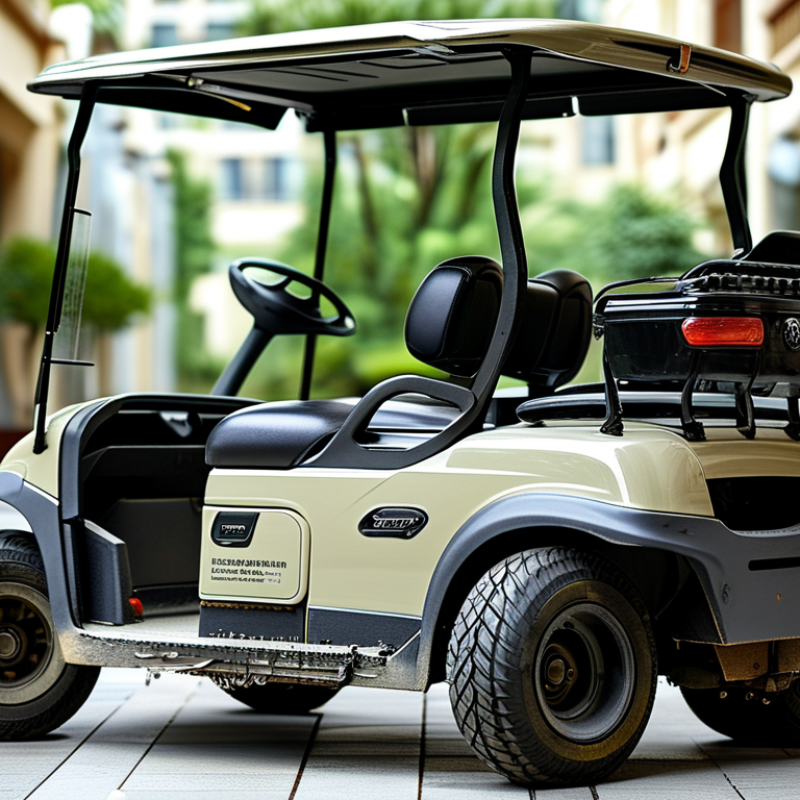
How to Source Golf Carts from China for Your Business

Define Golf Cart Specs: 2–6 Seats, 36–72 V, and 15–25 km/h

How to Source Golf Carts from China for Your Business

Before contacting Chinese suppliers, define the cart’s working environment. A two-seat model suits hotels, resorts, and security patrols. A six-seat version may serve campuses or large properties. Measure doorways, storage bays, turning areas, and passenger access. Small errors become expensive quickly.

Voltage affects range, torque, charging time, and component selection. Choose 36 V for lighter, shorter routes. Consider 48 V or 72 V for heavier loads, longer operation, or steep paths. A speed range of 15–25 km/h supports controlled site movement. Do not select the highest speed automatically. Check braking distance, tire grip, suspension, and local operating requirements. Ask suppliers for battery capacity, charger specifications, climbing ability, and test records. Request a sample unit before placing a larger order. Photos are useful, but they cannot show vibration or brake response.

Tips

Write every specification into the quotation. Include seat count, voltage, speed limit, dimensions, payload, battery type, and charging time. Ask whether the rated speed applies with passengers onboard. Inspect welds, wiring protection, seat fastening, and waterproofing. A useful inspection checklist should include cold-start performance and repeated braking. My own sourcing preference is to test beyond ideal conditions, because polished factory demonstrations can hide practical weaknesses. I would also leave some tolerance for redesign; the first specification is rarely perfect. Keep inspection photos, serial records, and corrective-action notes for each shipment.

Verify Chinese Suppliers Through ISO 9001, Factory Audits, and Sample Tests

How to Source Golf Carts from China for Your Business

Supplier verification should begin with ISO 9001, but certification alone is not enough. The ISO Survey 2022 recorded 1,265,216 valid ISO 9001 certificates worldwide. That figure shows its reach, not automatic product quality. Request the certificate number, issuing body, covered factory address, and expiration date. Confirm that the scope includes vehicle assembly, battery systems, or relevant manufacturing activities.

A factory audit should follow. Check incoming inspection records, welding areas, battery storage, charger testing, and final inspection stations. Ask workers to demonstrate torque tools and calibration records. Review production traceability from motor batches to finished carts. A polished showroom proves little. An audit can still miss seasonal subcontracting, so compare payroll, equipment, and production records with the supplier’s declared capacity. This is where many checks become too optimistic.

Sample testing must use written acceptance criteria. Test braking distance, steering return, hill performance, charger cut-off, battery endurance, and frame welds. Keep samples from different production dates when possible. The World Bank’s Logistics Performance Index 2023 emphasizes reliable tracking and shipment quality, which also matters for replacement parts and warranty evidence. Do not approve a supplier after one impressive unit. That mistake is easy. I would record every defect, retest failed items, and preserve dated photographs, test results, and corrective-action responses. Reliability grows from repeatable evidence, not confident sales language.

Check Compliance: CE, EMC, UN38.3, and Lithium-Battery Transport Rules

When sourcing golf carts from China, compliance should be checked before discussing shipment dates or unit prices. Ask the supplier for complete technical files, not only scanned certificates. For European sales, CE marking indicates conformity with applicable safety, machinery, electrical, and battery requirements. It is not a universal quality badge.

EMC testing matters when the cart uses controllers, chargers, displays, or wireless systems. Request the test report, model number, test standard, and laboratory details. The documents should match the exact cart configuration. A similar-looking report may not be enough. I have seen small changes in the charger create unexpected compliance gaps.

Lithium-powered carts require extra transport controls. Ask for the UN38.3 test summary for each battery model, plus the Safety Data Sheet and packaging instructions. Confirm whether the battery is shipped installed, separately, or with spare units. Air, sea, and road transport can require different labels, documents, and state-of-charge limits. Use packaging that protects terminals and prevents movement inside the crate. Photograph the battery compartment before sealing the shipment. This simple record can support later inspections.

Work with an independent testing laboratory when supplier evidence is unclear. Also verify destination-country rules with a qualified customs broker or dangerous-goods specialist. Requirements can change, and one document may not cover every market. My own practical mistake would be trusting a certificate without checking its product scope. Compliance is easier to manage when each cart, charger, and battery has a traceable file.

Compare MOQ, Incoterms, and Landed Cost Across 20–40 ft Containers

How to Source Golf Carts from China for Your Business

When sourcing golf carts from China, compare MOQ, container capacity, and landed cost together. A 20-foot container may fit fewer assembled carts but can reduce unused space for spare parts. A 40-foot container usually offers better unit economics, although it requires stronger sales planning. Ask suppliers for exact loading diagrams, carton dimensions, gross weights, and battery specifications. Do not rely on estimates copied from an old quotation.

MOQ affects more than price. It can determine color options, seat materials, battery types, and production scheduling. Some suppliers accept mixed configurations, while others require one specification per batch. Request a written MOQ table before discussing discounts. I have found that a low MOQ can hide higher inspection, packaging, and handling costs.

Tips: Compare EXW, FOB, CIF, and DDP quotations carefully. The cheapest invoice may not produce the lowest landed cost. Calculate the product price, inland transport, export fees, ocean freight, insurance, destination charges, duties, taxes, delivery, and inspection. Confirm which party handles customs documentation and battery compliance. Keep every assumption in a spreadsheet. My early estimates were too optimistic because port fees changed after arrival. Leave a contingency allowance, and ask for a revised quote when freight rates move. Small details matter.

How to Source Golf Carts from China for Your Business - Compare MOQ, Incoterms, and Landed Cost Across 20–40 ft Containers

Indicative procurement benchmark for business planning; obtain a current supplier quotation and customs classification before placing an order.
Scenario Vehicle Configuration Container MOQ Loading Quantity Unit Price Incoterm Ocean Freight Origin & Destination Charges Estimated Duty & Customs Estimated Landed Cost Landed Cost per Cart
Entry-level fleet 2-seat electric cart, lead-acid battery, 48 V system 20 ft 6 units 6 units $3,250 EXW $1,850 $1,180 $5,270 $27,800 $4,633
Entry-level fleet 2-seat electric cart, lead-acid battery, 48 V system 40 ft HC 12 units 12 units $3,250 FOB $2,750 $1,620 $10,010 $53,380 $4,448
Rental and resort use 4-seat electric cart, lead-acid battery, weather enclosure 20 ft 5 units 5 units $4,480 FOB $1,850 $1,180 $6,140 $31,570 $6,314
Rental and resort use 4-seat electric cart, lead-acid battery, weather enclosure 40 ft HC 10 units 10 units $4,480 CIF $2,750 $1,620 $8,960 $58,130 $5,813
Premium commercial fleet 4-seat electric cart, lithium-ion battery, upgraded controller 20 ft 5 units 5 units $6,150 FOB $1,850 $1,180 $8,250 $41,940 $8,388
Premium commercial fleet 4-seat electric cart, lithium-ion battery, upgraded controller 40 ft HC 10 units 10 units $6,150 FOB $2,750 $1,620 $12,300 $78,170 $7,817
Utility and maintenance 6-seat electric utility cart, steel cargo bed, lead-acid battery 20 ft 4 units 4 units $5,850 CIF $1,850 $1,180 $8,190 $34,620 $8,655
Utility and maintenance 6-seat electric utility cart, steel cargo bed, lead-acid battery 40 ft HC 8 units 8 units $5,850 CIF $2,750 $1,620 $14,040 $65,210 $8,151
Tourism and hospitality 8-seat electric shuttle cart, lithium-ion battery, hydraulic brakes 20 ft 3 units 3 units $7,600 FOB $1,850 $1,180 $9,880 $35,710 $11,903
Tourism and hospitality 8-seat electric shuttle cart, lithium-ion battery, hydraulic brakes 40 ft HC 6 units 6 units $7,600 FOB $2,750 $1,620 $15,960 $65,930 $10,988
Cost assumptions: Chinese export port to the U.S. West Coast, commercial import shipment, USD pricing, standard non-refrigerated containers, and delivery to a warehouse near Los Angeles. Estimated landed cost includes the vehicle purchase price, ocean freight, export documentation, terminal handling, customs brokerage, port-related charges, inland delivery allowance, and an indicative duty/customs reserve. Sales tax, financing, storage, inspection failures, demurrage, special homologation, and local registration fees are excluded. Actual container capacity depends on vehicle dimensions, battery type, packaging, and loading method.

Control Pre-Shipment Quality With AQL 2.5 and 100% Functional Tests

How to Source Golf Carts from China for Your Business

AQL 2.5 gives buyers a practical pre-shipment sampling framework under ISO 2859-1. It does not mean every unit is perfect. It means inspectors check a defined sample and compare defects against agreed limits. For golf carts, classify brake, steering, battery, and charger failures as critical or major defects. Cosmetic scratches may remain minor defects. This distinction matters. A 2023 UNCTAD transport report states that over 80% of global merchandise trade by volume moves by sea. One missed defect can therefore travel thousands of miles before correction.

Use 100% functional testing before loading. Inspectors should power each cart, measure battery voltage, test forward and reverse modes, check braking distance, inspect steering play, and verify lights and alarms. Record serial numbers, test results, photographs, and carton conditions. AQL sampling can reveal production patterns, but it may miss one dangerous failure. That is why combining sampling with full functional checks is stronger. It costs more. Still, rework after arrival usually costs more.

Tips: Provide a signed inspection checklist before production. Require cold-start testing after overnight storage. Ask for random retests after repairs. Do not accept factory-only videos as proof. Review the sampling plan with an independent inspector. One practical weakness remains: testing every function does not predict long-term battery aging. Consider adding a short loaded driving test, even when the supplier calls it unnecessary.

How to Source Golf Carts from China: AQL 2.5 and 100% Functional Testing

The chart compares the ANSI/ASQ Z1.4 General Inspection Level II sample coverage used for AQL 2.5 normal inspection with a 100% functional test requirement. Sample sizes are based on representative shipment-lot ranges; functional testing covers every unit.

Reference framework: ANSI/ASQ Z1.4, General Inspection Level II, normal inspection. AQL defines an acceptance-sampling plan and does not replace complete functional testing.

FAQS

What documents should I request before choosing a supplier?

Request the ISO 9001 certificate number, issuing body, factory address, scope, and expiration date. The scope should cover vehicle assembly or related systems. Certification alone proves little.

Why is a factory audit important?

An audit shows how the factory actually works. Check welding areas, battery storage, charger testing, and final inspection stations. A bright showroom can mislead.

How can I detect undeclared subcontracting?

Compare payroll, equipment, production records, and declared capacity. Ask where each production stage happens. Seasonal outsourcing may remain hidden.

What should sample testing include?

Test braking distance, steering return, hill performance, charger cut-off, battery endurance, and frame welds. Use written acceptance criteria. Keep dated photographs.

Is one excellent sample enough for approval?

No. Test samples from different production dates when possible. Record every defect and retest failed items. One impressive unit proves little.

What does AQL 2.5 mean for pre-shipment inspection?

AQL 2.5 defines a sampling framework under ISO 2859-1. It does not mean every cart is perfect. Classify brake and steering failures as major defects.

Why are 100% functional tests still necessary?

Inspectors should power every cart and test forward and reverse modes. They should measure battery voltage and braking distance. Sampling can miss one dangerous failure.

What records should inspectors preserve?

Keep serial numbers, test results, photographs, carton conditions, and corrective-action responses. Require random retests after repairs. Factory videos are weak evidence.

How can I check battery performance more realistically?

Add a cold-start test after overnight storage. Consider a short loaded driving test. Functional testing cannot predict long-term battery aging. That limitation deserves attention.

Conclusion

Learning how to source golf carts from China requires a clear product specification and a structured supplier evaluation process. Start by defining the required seating capacity, typically 2 to 6 seats, battery system between 36 and 72 volts, and a target speed of 15 to 25 km/h. Shortlist suppliers that can provide ISO 9001 documentation, support factory audits, and submit samples for performance and durability testing. Before placing an order, confirm applicable compliance materials, including CE and EMC documentation, UN38.3 test evidence for lithium batteries, and proper battery transport procedures.

A complete purchasing comparison should include minimum order quantities, Incoterms, shipping options, and the estimated landed cost for 20- to 40-foot containers. To reduce quality risks, establish pre-shipment requirements using an AQL 2.5 sampling standard together with 100% functional testing of essential systems such as braking, steering, charging, lighting, and safety features. Clear specifications, written inspection criteria, and reliable communication can help create a more predictable and efficient sourcing process.

Sophia

Sophia

Sophia is a dedicated marketing professional with an exceptional depth of knowledge about her company's products and services. With a keen understanding of market trends and customer needs, she crafts insightful blog posts that not only inform but also engage readers, enriching the company’s online......