How Long Do Golf Cart Batteries Last in 2026?

Time:2026-11-19 Author:Ethan
0%

How long do golf cart batteries last? The answer depends on chemistry, charging habits, climate, and daily use. In a maintained cart, flooded lead-acid batteries commonly last about four to six years. Lithium packs often serve longer, but their lifespan depends on cycle depth, temperature, and the battery management system. These are practical ranges, not guarantees.

Manufacturer documentation helps explain the difference. Trojan Battery’s deep-cycle battery guidance emphasizes proper charging, watering, and maintenance for lead-acid life. RELiON’s published lithium specifications report cycle-life ratings under defined test conditions. Those figures are useful, but a laboratory cycle is not a season of golf-cart use. Real carts sit in hot garages, climb hills, carry passengers, and sometimes return from a round nearly empty. Small habits matter.

This guide examines how long do golf cart batteries last in 2026, what shortens their service life, and how to spot decline before a cart stalls. A battery that loses range may be aging, though a weak connection or charger fault can look similar. That distinction is easy to miss. We’ll compare lead-acid and lithium expectations, explain what warranties do—and do not—promise, and share practical checks owners can make. Treat lifespan estimates as planning tools, not a countdown clock. The honest answer is sometimes less tidy than a product label suggests.
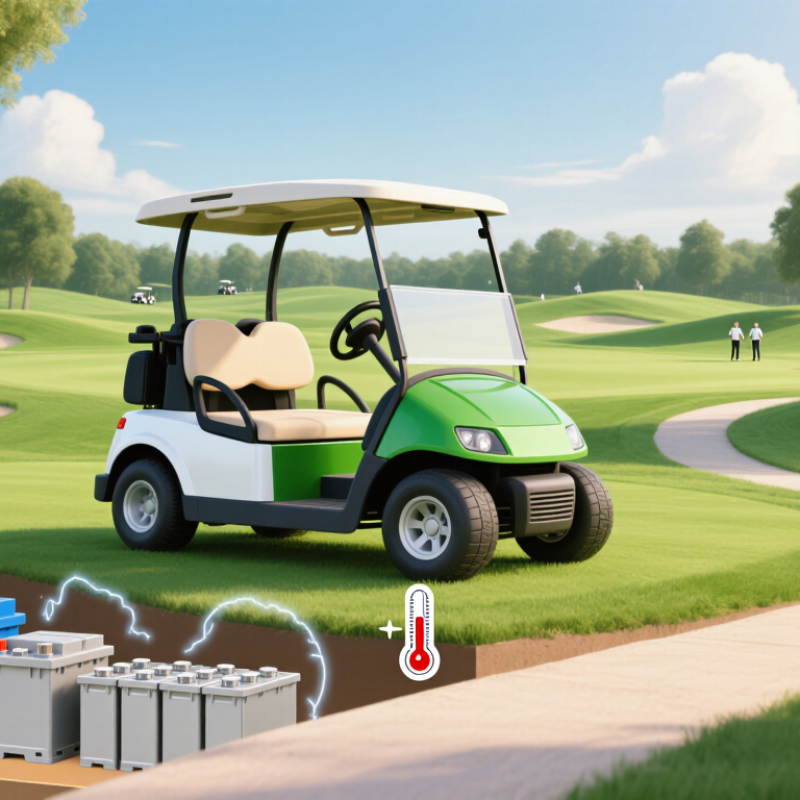
How Long Do Golf Cart Batteries Last in 2026?

Golf Cart Battery Lifespan by Battery Type in 2026

Golf cart battery life in 2026 depends largely on battery chemistry, charging habits, and daily use. Flooded lead-acid batteries commonly last about three to five years. Their lifespan can shorten when water levels drop below the plates or the cart sits discharged for weeks. Check electrolyte levels regularly, and keep terminals clean. Small habits matter. Heat matters.

AGM lead-acid batteries often last around four to six years. They are sealed, so routine water checks are unnecessary, but they still need suitable charging and ventilation. Frequent deep discharges can wear them down faster than occasional, moderate use. Lithium batteries may last eight to twelve years, with many rated for roughly 2,000 to 5,000 charge cycles. Actual results vary with temperature, load, and charging equipment.

These ranges are estimates, not guarantees. Not a promise. A cart carrying passengers up steep paths will use more energy than one cruising on level pavement. Watch for reduced distance per charge, slower acceleration, or a battery pack that struggles after sitting overnight. Those signs can point to aging, though loose connections or a faulty charger may cause similar symptoms. I would not judge lifespan by age alone; track charging behavior and real-world range, too.

How Long Do Golf Cart Batteries Last in 2026? — Lifespan by Battery Type

Battery Type Typical Service Life Approximate Charge Cycles Routine Maintenance What Most Affects Lifespan
Flooded lead-acid About 4–6 years About 500–800 cycles Regularly check electrolyte levels, use distilled water when needed, and keep terminals clean. Low water levels, infrequent charging, deep discharges, heat, and poor terminal care.
AGM lead-acid About 4–7 years About 400–800 cycles Sealed and generally maintenance-free; keep terminals clean and use a compatible charger. Excessive heat, repeated deep discharges, overcharging, and extended storage while discharged.
Lithium iron phosphate (LiFePO₄) About 8–12 years About 2,000–5,000 cycles Typically requires no watering; follow the battery maker’s charging and storage guidance. Operating temperature, charge settings, depth of discharge, and the battery management system.

These are general estimates for 2026, not guarantees. Actual service life varies with battery quality, cart use, climate, charging habits, storage, and maintenance. A charge cycle means one equivalent full discharge and recharge; several partial discharges can add up to one cycle.

Key Factors That Affect How Long a Battery Lasts

How Long Do Golf Cart Batteries Last in 2026?

Key Factors That Affect How Long a Battery Lasts

Battery life depends less on the calendar than on daily use. The U.S. Department of Energy’s 2022 Grid Energy Storage Technology Cost and Performance Assessment lists roughly 500–1,500 cycles for lead-acid systems. That is a stationary-storage benchmark, not a golf-cart guarantee. Deep discharges, frequent partial charging, and heavy loads can shorten service life. A cart climbing steep paths or carrying several passengers works its batteries harder than one cruising flat pavement.

Heat matters. High temperatures accelerate battery wear, while cold weather can reduce available power. Flooded lead-acid batteries also need regular watering and clean terminals; missed maintenance can leave plates exposed or connections corroded. Charging habits matter, too. Recharging promptly after a ride helps prevent batteries from sitting at a low state of charge. Real-world results still vary, and a neglected battery may fail early despite careful estimates.

Tips: Check electrolyte levels monthly, if your battery type allows it. Keep terminals clean and charge after use. Small habits count. If one battery repeatedly shows a much lower reading, have the full set tested; replacing just one may not fix the underlying imbalance.

How Long Do Golf Cart Batteries Last in 2026?

Typical service-life estimates by battery type

These ranges are general estimates, not guarantees. Actual battery life depends on usage and care: frequent deep discharges, improper charging, extreme temperatures, and poor maintenance can shorten it. Follow the battery manufacturer’s charging and maintenance guidance.

How to Estimate Battery Life from Usage and Charging Habits

To estimate golf cart battery life, count use in full-charge equivalents rather than trips. A short ride on flat paths may use little capacity; a long route with hills, passengers, or heavy cargo uses much more. If your cart uses roughly half its charge each day, two days of driving equal about one full cycle. It is an estimate, not a promise.

Charging habits change the picture. Recharging after each outing usually helps prevent deep discharge, especially with lead-acid batteries. Leaving them discharged overnight, storing them in heat, or repeatedly interrupting a charge can shorten useful life. Lithium batteries tolerate deeper use better, but they still age and need a compatible charger. Small details matter.

Keep a simple log for a few weeks: distance, hills, passenger load, charge time, and how quickly the battery indicator drops. Compare similar routes, since dashboard gauges can be imprecise. My first estimate would probably be too optimistic if I ignored hot weather or an aging battery. Watch for slower hill climbs, shorter range, or voltage sag under load. A capacity test from a qualified service technician can check whether the battery is losing usable energy, rather than merely showing a temporary low charge.

Signs a Golf Cart Battery Is Nearing the End of Its Life

How Long Do Golf Cart Batteries Last in 2026?

Signs a Golf Cart Battery Is Nearing the End of Its Life

A failing battery often gives small warnings before the cart stops. It may slow on a familiar hill, lose range between charges, or show a sharp voltage drop under acceleration. Check the battery after charging, too. Corroded terminals, cracked cases, swelling, or unusual heat deserve attention; stop using a visibly damaged battery and have it inspected. A single weak cell can make the whole pack feel tired.

Runtime is the clearest clue.

Track how far the cart travels after a full charge, using similar routes and loads. If that distance keeps shrinking, ask a technician to test each battery’s voltage and capacity.

IEEE Std 1188 uses 80% of rated capacity as a replacement benchmark for stationary valve-regulated lead-acid batteries; it is not a golf-cart-specific rule. Battery University’s lead-acid cycle-life table estimates about 200 cycles at full discharge and 500 at 50% discharge, illustrating how deep discharges can shorten service life. These figures are estimates, not a promise. Temperature, charging habits, and maintenance all matter.

Even so, owners sometimes blame the charger too quickly; testing the pack first can prevent an unnecessary replacement.

Ways to Extend Battery Life and Know When to Replace It

Golf cart battery life depends on battery type, temperature, charging habits, and how far the cart travels each day. A pack used on steep paths and discharged deeply may wear faster than one used for short, level trips. Small habits matter.

Charge the batteries after use rather than leaving them nearly empty for days. Keep the cart and charger in a dry, well-ventilated area, and check connections for dirt or corrosion. For serviceable flooded lead-acid batteries, inspect water levels regularly and add distilled water only as the manufacturer’s manual directs. Sealed lead-acid and lithium batteries need different care, so do not open them or assume the same maintenance applies. Use a compatible charger, too. That detail is easy to overlook.

Watch for a shorter range, sluggish acceleration, or a battery gauge that drops sharply under load. These signs can point to aging, but they are not proof: low tire pressure, cold weather, or a faulty connection can mimic battery trouble. I would not replace a whole set after one weak afternoon. Have voltage and individual batteries checked under load; replace batteries that repeatedly fail testing or show leaks, swelling, or damaged cases. A battery may be near the end even when it still accepts a charge.

FAQS

How long do golf cart batteries usually last?

Flooded lead-acid batteries often last three to five years. AGM batteries may last four to six years, while lithium batteries often last eight to twelve years. Actual results vary.

What can shorten a golf cart battery’s lifespan?

Deep discharges, heavy loads, high temperatures, and poor charging habits can speed up wear. Steep hills and several passengers also use more power.

How often should flooded batteries be checked?

Check electrolyte levels about monthly, and keep terminals clean. Don’t let the plates become exposed. Small habits matter.

Do sealed batteries need no maintenance?

AGM batteries do not need routine water checks, but they still need suitable charging and ventilation. “Sealed” does not mean maintenance-free in every way.

What are common signs of an aging battery?

The cart may travel less after a full charge, slow down on familiar hills, or lose power during acceleration. A pack that struggles after sitting overnight may also need testing.

Could a charger or loose connection cause similar symptoms?

Yes. A faulty charger or loose connection can resemble battery wear. Test the pack and connections before replacing batteries. I might suspect the battery too quickly.

How can I track battery performance?

Record the distance traveled after each full charge. Compare similar routes, passenger loads, and conditions. Look for a steady decline, not one unusual trip.

Should I replace one weak battery or the whole set?

Have the full set tested if one battery repeatedly reads much lower. Replacing only that battery may not solve an underlying imbalance. Ask a technician to check voltage and capacity.

Conclusion

How long do golf cart batteries last in 2026? The answer depends largely on battery type, how often the cart is driven, the terrain it covers, and the care it receives. Frequent deep discharges, heavy loads, extreme temperatures, and inconsistent charging can shorten a battery’s useful life. By contrast, matching charging habits to the battery type and avoiding unnecessary strain can help it perform well for longer.

You can estimate battery life by considering how regularly the cart is used and whether it is recharged appropriately after trips. Slower acceleration, reduced driving range, longer charging times, or trouble holding a charge may indicate that a battery is nearing the end of its life. Routine checks, clean and secure connections, and sensible charging and storage habits can help extend battery life. When these steps no longer restore dependable performance, replacing the battery may be the practical choice.

Ethan

Ethan

Ethan is a seasoned marketing professional with a deep expertise in our company's innovative product line. With a passion for sharing knowledge and insights, he takes the lead in regularly updating our corporate blog, where he explores industry trends, product features, and effective marketing......