Choosing golf carts for a large facility requires more than comparing speed, color, and purchase price. The right fleet must match daily routes, passenger numbers, cargo weight, terrain, weather, and operating hours. A cart moving between hospital buildings faces different demands than one serving a resort, warehouse, university, or industrial campus. This practical difference explains why are golf carts used in large facilities: they provide flexible, low-speed transportation across wide properties while reducing walking time and supporting routine operations.
Facility managers should begin with real operating evidence. Measure route distances, peak passenger demand, loading points, slope conditions, and charging access. A two-seat electric cart may suit short inspection trips, while a six-seat model may better serve visitor transport. Cargo beds, enclosed cabins, weather protection, headlights, mirrors, seat belts, and accessibility features can also influence the final choice. Manufacturer specifications matter, but a supervised trial on the actual site often reveals problems that brochures miss. Battery performance may change during cold mornings, heavy rain, or repeated uphill travel.
A perfect cart rarely exists. Some assumptions fail.
Reliable selection also includes maintenance support, spare parts, battery replacement planning, operator training, and documented safety procedures. Compare total operating costs, not only the initial invoice. Speak with experienced fleet technicians and request service records where possible. A careful evaluation may take longer, yet it can prevent underpowered carts, crowded passenger trips, and avoidable downtime. The strongest decision combines measured facility needs, professional advice, and honest review after deployment. Even then, the fleet should be reassessed as routes, staffing, and visitor expectations change.
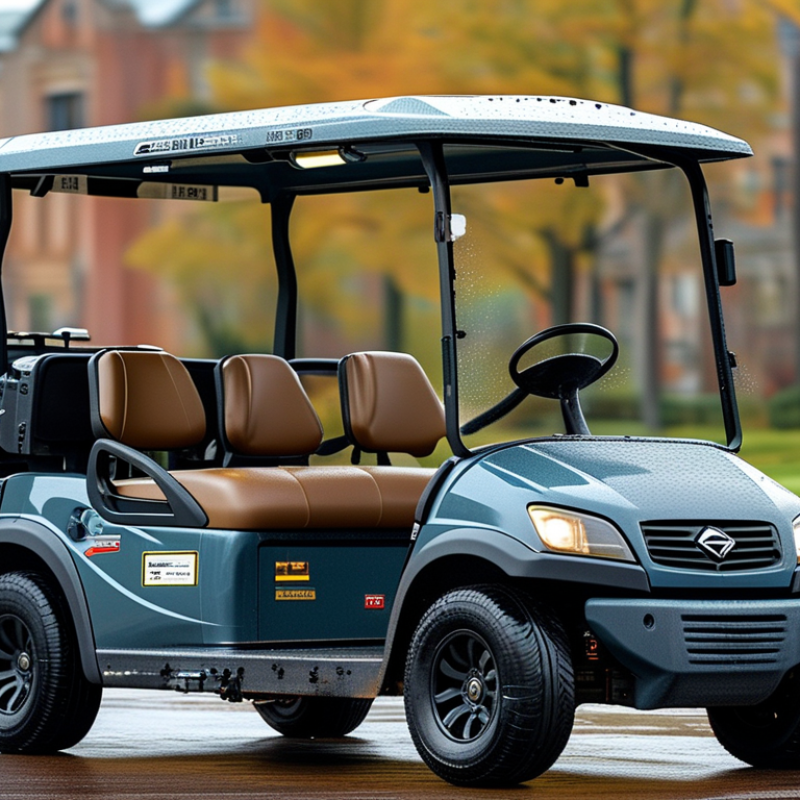
Large facilities need more than a larger golf cart fleet. They need a clear operating profile. Measure daily passengers, cargo weight, route distance, slopes, surface conditions, and peak movement periods. A hospital campus may need quiet passenger carts, while a warehouse may require enclosed cargo models. Different jobs demand different specifications.
Grand View Research valued the global golf cart market at about USD 1.7 billion in 2023. Its report also projects continued growth through 2030. This suggests wider adoption, but market growth does not define your fleet size. Use real site data instead.
Record the busiest hour, average trip length, charging time, and seasonal demand. A perfect utilization rate is unrealistic. Leave capacity for weather, maintenance, and unexpected traffic. I would rather carry ten percent spare capacity than strand staff across a six-building campus.
Tips: Create a simple route map before purchasing. Mark slopes, narrow gates, loading points, pedestrian crossings, and charging locations. The U.S. Department of Energy notes that charging performance depends on equipment, battery condition, and operating conditions. Therefore, test vehicles during a full shift, not only during a showroom demonstration. Check turning radius beside storage racks. Measure stopping distance on wet surfaces. Ask operators to report visibility problems and uncomfortable seating. Small details become expensive at scale. Review the results after thirty days, because the first fleet plan will probably be incomplete.
Choosing golf carts for a large facility starts with movement, not seating capacity. Walk the property during a busy shift. Mark gates, loading zones, visitor paths, service roads, and emergency access. A clean site map rarely shows daily friction. Observe where carts wait, turn, or meet pedestrians. Measure the longest routine trip, then add detours caused by restricted areas. A 1.5-mile loop can become three miles when routes are one-way. That distance affects battery capacity, charging schedules, and driver comfort.
Terrain deserves a practical inspection. Record slopes, loose gravel, wet grass, cracked concrete, and sharp elevation changes. A cart that feels stable on pavement may struggle beside a landscaped pond. Steep ramps also increase stopping distance, especially with passengers or equipment. Match ground clearance, braking performance, suspension, and tire design to the actual surface. Do not rely only on a specification sheet. Test a loaded cart on the roughest regular route. I once underestimated a short gravel incline; it caused more delays than a much longer paved section.
Travel patterns should guide fleet size and configuration. Count trips by hour, not just total daily mileage. Staff may need continuous transport, while visitors travel in short bursts. Compare one-way distances with charging points and turnaround time. Place charging areas near operational hubs, but never where they narrow pedestrian routes. Consider weather, night visibility, storage, and seasonal demand. A larger fleet is not always better. Too many vehicles create congestion and maintenance work. Recheck assumptions after a trial week. Real traffic often exposes weaknesses that planning misses.
Choosing carts for a large facility starts with movement patterns, not vehicle appearance. Map daily routes, floor conditions, passenger demand, and cargo weights. A two-seat utility cart suits inspection teams carrying light tools. A four- or six-seat model handles staff transfers, but turning space shrinks. For heavier loads, choose a flatbed or enclosed cargo body with a rated payload. Do not treat seating capacity as payload capacity. That mistake is common.
Capacity should reflect peak periods, not average traffic. Record the heaviest routine load, the longest route, and the steepest grade. A cart carrying six adults may need stronger braking control and suspension support. Passenger models improve movement between buildings, while utility models support maintenance crews and deliveries. For narrow aisles, compact dimensions can matter more than extra seats. Measure doorways and charging areas before ordering. Facility managers often overlook turning radius.
Power systems require practical comparison. Battery-electric carts offer quiet operation and low local emissions near offices, clinics, and visitor areas. Lead-acid batteries usually cost less initially, but require ventilation, watering, and careful charging routines. Lithium-based systems can reduce maintenance and charging downtime, though their purchase price is higher. Fuel-powered carts may support long outdoor routes, yet noise, fuel storage, and air quality require review. Use duty-cycle data when sizing chargers and spare vehicles. I have seen facilities buy for peak demand, then leave carts idle most days. A mixed fleet may work better, although it adds training and maintenance complexity. The numbers should be checked after a trial week.
| Cart Type | Typical Seating | Typical Payload Capacity | Typical Travel Range | Common Power Systems | Best-Fit Facility Applications | Main Selection Considerations |
|---|---|---|---|---|---|---|
| Utility Cart | 2–4 | 450–800 kg (990–1,760 lb) |
40–80 km (25–50 mi) |
Electric battery or gasoline engine | Maintenance, landscaping, security patrols, internal logistics, and equipment transport | Choose a cargo bed, towing package, suspension, and payload rating based on the heaviest regular load. |
| Passenger Shuttle Cart | 6–8 | 500–750 kg (1,100–1,650 lb) |
40–80 km (25–50 mi) |
Electric battery or gasoline engine | Hotels, resorts, hospitals, airports, campuses, retirement communities, and large venues | Check passenger flow, accessibility requirements, weather protection, seat belts, steps, and route width. |
| People-Mover Cart | 8–14 | 700–1,200 kg (1,540–2,645 lb) |
35–70 km (22–44 mi) |
High-capacity electric battery or gasoline engine | Large campuses, event grounds, transit connections, and facilities with frequent group transfers | Confirm axle load, braking performance, turning radius, passenger access, and local operating rules. |
| Cargo-Bed Transport Cart | 2–4 | 450–1,000 kg (990–2,205 lb) |
35–75 km (22–47 mi) |
Electric battery or gasoline engine | Warehouses, factories, campuses, resorts, sports complexes, and grounds operations | Evaluate bed dimensions, load distribution, ramps, tie-down points, towing capacity, and braking on slopes. |
| Four-Wheel-Drive Utility Cart | 2–6 | 500–900 kg (1,100–1,985 lb) |
35–70 km (22–44 mi) |
Electric battery or gasoline engine | Uneven grounds, construction areas, farms, golf-course maintenance, and outdoor infrastructure | Prioritize ground clearance, traction, approach angle, water resistance, tire selection, and hill-climbing ability. |
| Street-Legal Low-Speed Cart | 2–6 | 350–700 kg (770–1,540 lb) |
40–100 km (25–62 mi) |
Electric battery or gasoline engine | Private roads, residential developments, campuses, and controlled-access facility roads | Verify jurisdictional requirements for speed, lighting, mirrors, windshield, seat belts, insurance, and registration. |
| Power System | Typical Voltage or Fuel | Advantages | Limitations | Best for Large Facilities When... |
|---|---|---|---|---|
| Lead-Acid Electric | 36–48 V battery system | Lower initial cost, widely available service, and proven technology | Longer charging time, heavier battery pack, regular watering for flooded designs, and reduced performance when deeply discharged | Vehicles can return to a charging area for several hours and a maintenance team can manage battery care. |
| Lithium-Ion Electric | Typically 48 V or higher | Fast opportunity charging, lower routine maintenance, stable voltage, and lighter weight | Higher purchase price, battery-management requirements, and the need for compatible charging equipment | Vehicles operate for multiple shifts, downtime is costly, or battery maintenance must be minimized. |
| Gasoline Engine | Commonly 4-stroke gasoline | Rapid refueling, long continuous operating periods, and suitability for remote outdoor areas | Exhaust emissions, engine noise, fuel storage, and more mechanical maintenance | Charging infrastructure is limited or vehicles must run continuously in well-ventilated outdoor environments. |
| Hybrid or Alternative-Fuel System | Application-specific | Can combine extended operating time with reduced fuel use or lower emissions | Greater system complexity, specialized service needs, and less uniform availability of parts | The facility has defined sustainability targets but requires more range than a standard battery system can provide. |
Note: Capacity and range figures are typical planning ranges for facility vehicles. Actual performance varies with passenger or cargo weight, terrain, gradient, temperature, tire pressure, driving speed, battery condition, and operating cycles. Always confirm the manufacturer’s rated payload, gross vehicle weight, braking capacity, and applicable local regulations before purchase.
How to Choose Golf Carts for Large Facilities?
In large facilities, safety begins with the route, not the cart. Map slopes, blind corners, loading areas, and pedestrian crossings before comparing models. A cart with strong brakes, lights, mirrors, seat belts, and a visible warning signal supports safer daily movement. Speed control also matters. Faster is rarely better near visitors, workers, or medical areas.
Accessibility needs practical testing. Check whether users can enter without twisting or climbing over a high step. Handholds should feel secure, and controls must be reachable from a seated position. Provide enough room for mobility devices when required. Test the turning radius in real corridors, not only on a showroom floor. I have seen a cart pass a technical inspection but struggle beside a crowded reception desk. That mistake was avoidable.
Operating rules should be written before vehicles arrive. Confirm local requirements for operator training, age limits, seat-belt use, lighting, insurance, and permitted routes. Keep inspection logs, maintenance records, and incident reports in one accessible system. Train operators to reduce speed in poor weather and yield at crossings. Mark charging areas clearly and control pedestrian access. A risk assessment should include battery handling and emergency procedures. Regulations can vary between municipalities, so facility managers should verify details with the relevant authority. We once underestimated staff turnover. Refresher training became necessary sooner than planned. That lesson still shapes our selection process.
Evaluating safety, accessibility, and operating regulations
Use these U.S. accessibility planning benchmarks when comparing cart width, turning performance, and route compatibility. The values are based on the 2010 ADA Standards for Accessible Design: accessible routes require a 36-inch minimum clear width, doors require a 32-inch minimum clear opening, and a wheelchair turning space or passing space is typically 60 inches. Facility operators should also verify local speed limits, pedestrian controls, driver training, seat-belt requirements, charging procedures, and traffic-management rules before deployment.
Source: 2010 ADA Standards for Accessible Design, Sections 403 and 404.
Choosing golf carts for a large facility starts with daily movement, not showroom features. Map passenger routes, cargo loads, slopes, weather exposure, and average duty hours. A twelve-hour security shift needs different capacity from a short hotel transfer. Count peak demand, not only normal demand. Keep a small reserve. Otherwise, one failed unit can disrupt an entire site. In my experience, collecting two weeks of route data reveals assumptions that interviews miss. Some trips are surprisingly short.
Fleet cost includes purchase, charging infrastructure, energy, tires, batteries, inspections, training, and labor. Compare cost per operating hour, not sticker price. Ask suppliers for service intervals and realistic battery-life estimates. Then test those figures against your climate and workload. Our first replacement forecast was too optimistic. Heavy cargo and frequent stops accelerated wear. That mistake changed our planning model. Build a maintenance log with mileage, fault codes, tire wear, and charging behavior. Schedule inspections before holiday peaks or seasonal surges. Keep critical spares on site, but avoid storing parts you rarely use.
Charging needs careful capacity planning. Measure available electrical capacity and assign charging windows around shift changes. Use separated, ventilated areas and trained staff. Follow local electrical and workplace requirements. Do not overcrowd charging points. Use real data. A simple dashboard can show utilization, idle time, energy use, and overdue service. Review it monthly. Replacement planning should begin years before failures become common. Set condition thresholds for range, braking, corrosion, and repair frequency. Yet thresholds are not perfect. A cart with low mileage may still have aging components. Get an independent inspection before extending its service life.
: Measure passengers, cargo weight, route distance, slopes, charging time, and peak movement periods. Count trips by hour. Keep about ten percent spare capacity for weather, maintenance, and unexpected traffic. Perfect utilization is unrealistic.
Mark slopes, narrow gates, loading points, pedestrian crossings, storage areas, and charging locations. Include one-way routes and common detours. A short route can become much longer.
Inspect gravel, wet grass, cracked concrete, ramps, and sharp elevation changes. Match ground clearance, brakes, suspension, and tires to real surfaces. Test a loaded cart on the roughest regular route. Specifications may not show everything.
Record average trip length, busiest hours, charging time, and battery condition. Place charging areas near operational hubs. Do not block pedestrian routes. Test vehicles through a full shift, not only briefly.
Useful features include reliable brakes, lights, mirrors, seat belts, and visible warning signals. Speed control matters near visitors, workers, and medical areas. Faster is rarely better.
Check whether users can enter without twisting or climbing over high steps. Test handholds, controls, seating space, and turning radius. Allow room for mobility devices when required. Real corridors expose problems.
Confirm local requirements for training, age limits, seat belts, lighting, insurance, and permitted routes. Keep inspection, maintenance, and incident records together. Train operators to slow down in poor weather and yield at crossings.
Review performance after the first trial week and again after thirty days. Compare delays, traffic conflicts, battery use, comfort complaints, and maintenance needs. The first plan may be incomplete. That is normal.
Choosing golf carts for a large facility begins with clearly defining transportation requirements, including passenger volume, cargo needs, operating hours, and trip frequency. The question “why are golf carts used in large facilities” is often answered by their ability to move people and materials efficiently across campuses, resorts, industrial sites, hospitals, and event grounds. A proper evaluation should consider the facility’s layout, road surfaces, slopes, weather conditions, and average travel distances before selecting suitable vehicle sizes, seating arrangements, load capacities, and power systems.
Safety, accessibility, and operating rules should guide every purchasing decision. Facilities should plan for reliable braking, visibility, passenger protection, controlled speeds, accessible entry, and responsible driver training. In addition to the purchase price, decision-makers should estimate energy use, charging infrastructure, routine servicing, replacement parts, storage, and eventual fleet renewal. A well-planned fleet balances performance, comfort, operating costs, and long-term reliability while supporting the facility’s daily workflow.

Kabar Golf