2026 Best Golf Carts How Does a Golf Cart Work?

Time:2026-10-13 Author:Mason
0%

Understanding how does a golf cart work begins with its power source, controls, and drivetrain. Most modern carts use rechargeable batteries, while some models use gasoline engines. Battery packs send electrical energy to a controller, which regulates power before it reaches the motor. The motor then turns the gears, axle, and wheels. Simple in principle.

When the driver presses the accelerator, sensors communicate with the controller. The controller adjusts motor speed and torque for smooth movement. A braking system slows the cart, while suspension components help absorb uneven paths. Some newer carts include regenerative braking, but its benefits vary by design and driving conditions. Charging systems also differ, so owners should follow the manufacturer’s specifications rather than rely on assumptions.

Choosing among the 2026 best golf carts requires more than comparing speed or appearance. Real-world use matters. A cart carrying four adults up a damp hill needs different performance from one used on a flat course. Battery age, tire pressure, terrain, and maintenance can change its range noticeably. I have found that advertised distances often feel optimistic in everyday driving. That deserves careful attention. Reliable evaluations should examine motor output, charging time, braking performance, build quality, and service support. Manufacturer manuals and qualified technicians remain the strongest references for technical details. A careful buyer should also inspect wiring, battery connections, and safety features before regular use. Golf carts may look simple, but their systems deserve respect. Understanding each component makes operation safer, maintenance clearer, and comparisons more honest.
2026 Best Golf Carts How Does a Golf Cart Work?

What Is a Golf Cart and What Makes It Useful in 2026?

A golf cart is a compact, low-speed vehicle designed for short trips and light loads. In 2026, most models use an electric motor, rechargeable batteries, a controller, and a simple drivetrain. Pressing the accelerator sends a signal to the controller, which adjusts power to the motor. The motor turns the axle and wheels through gears. Braking usually cuts motor power and may recover a small amount of energy. That process feels simple. It is not magic.

Its usefulness now extends beyond golf courses. A cart can move people across resorts, campuses, retirement communities, farms, and large private properties. It produces little local noise and needs less space than a full-size vehicle. Some versions carry tools, supplies, or small trailers. In daily use, the quiet motor helps workers communicate without shouting. However, published travel ranges can be optimistic. Hills, heavy loads, cold weather, and frequent stops reduce battery performance.

Reliable operation depends on basic care. Battery connections should stay clean and tight. Tire pressure deserves regular checks. A trained technician should inspect brakes, steering, wiring, and charging equipment. Owners also need to verify local access rules before using a cart on public roads. I once assumed a short route would be effortless, but uneven ground changed that quickly. Comfort and convenience still depend on terrain, maintenance, and sensible driving.

What Are the Main Parts Inside a Golf Cart?

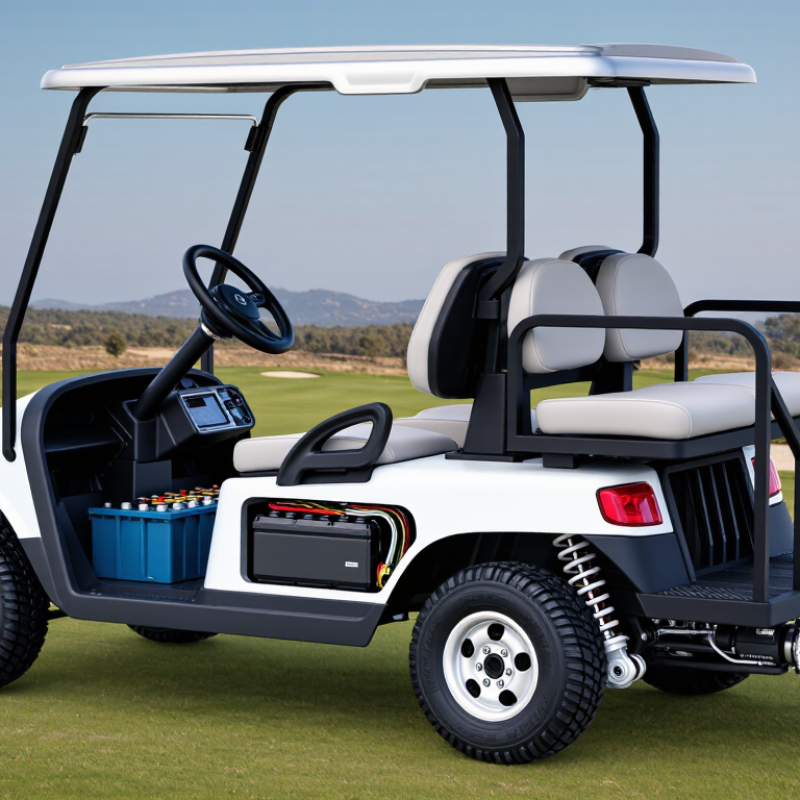
Inside an electric golf cart, the battery pack stores energy for every trip. The charger replenishes it after use. A controller regulates power when the accelerator moves. The electric motor then turns the transaxle, which drives the rear wheels. It feels simple, but timing matters. A gas-powered cart uses an engine, fuel system, exhaust, and starter instead.

The frame carries the vehicle’s weight and protects major components. Suspension parts absorb bumps near uneven paths. Steering linkages transfer movement from the wheel to the front tires. Brakes create friction at the wheels or axle. Wiring connects the battery, controller, motor, lights, and dashboard. A loose terminal can cause sudden power loss. Corrosion may hide beneath a clean-looking cable.

Body panels mainly provide shelter and structure. Seats attach to a supporting base, while tires transfer force to the ground. During a practical inspection, check cables for heat damage, battery cases for cracks, and brake travel for unusual softness. Disconnect the power source before handling electrical parts. A common mistake is judging condition by appearance alone. A polished cart may still have worn bushings or weak connections. Even experienced owners can miss faults inside crowded compartments. The service manual should guide measurements, tightening values, and replacement decisions.

2026 Best Golf Carts: How Does a Golf Cart Work?

A golf cart uses a battery pack to supply electrical energy to the motor. The controller regulates power, while the transaxle transfers torque to the wheels. The chart shows common nominal battery-pack voltage configurations used in golf carts.

Main Parts Inside a Golf Cart

Battery Pack

Stores direct-current energy and supplies power to the cart’s electrical system.

Electric Motor

Converts electrical energy into rotational force to move the cart.

Motor Controller

Controls the motor’s speed and torque according to accelerator input.

Charger

Converts incoming AC power into the correct charging current for the battery pack.

Transaxle and Differential

Transfers motor torque to the axle and allows the drive wheels to rotate effectively.

Wiring and Safety Systems

Connects the electrical components and supports functions such as braking, reversing, and key control.

The voltage values represent common nominal battery-pack configurations. Actual voltage varies during charging, use, and battery discharge.

How Does a Golf Cart Generate and Deliver Power?

A golf cart turns stored energy into controlled wheel movement. In an electric cart, batteries hold chemical energy and release direct current through heavy cables. The controller reads the accelerator signal and adjusts current flow. More current usually creates more motor torque, but it also increases heat and battery demand. The motor changes electrical energy into rotation. A transaxle and differential then transfer that rotation to the drive wheels.

Power delivery is not perfectly efficient. Some energy becomes heat in the cables, controller, and motor. Loose terminals can create resistance, causing weak acceleration or unusual warmth. The charger reverses the process when the cart is parked. It converts household alternating current into suitable battery charging current. A charging system also monitors voltage and reduces current near full charge. This sounds simple, but battery condition, tire pressure, slope, and passenger weight can change performance sharply. A common mistake is blaming the motor immediately.

Tips: Check cable connections before replacing parts. Keep battery terminals clean and firmly tightened. Watch for swollen batteries, cracked insulation, or burning smells. Stop using the cart if these signs appear. Test voltage with proper equipment, not guesswork. Remember that a full display reading does not always prove healthy batteries; capacity may still be poor. A professional load test can reveal that hidden weakness.

How Do Electric and Gas Golf Carts Work Differently?

Electric and gas golf carts use the same basic cycle: energy reaches a motor, the motor turns a drive system, and the wheels create movement. Their power sources behave very differently. An electric cart stores energy in batteries, usually packs of lead-acid or lithium-ion cells. Pressing the accelerator sends current through a controller to the motor. The ride feels quiet and smooth. The difference is audible.

The U.S. Department of Energy’s Alternative Fuels Data Center reports that electric vehicles typically convert 77–82% of stored electrical energy into motion. Conventional gasoline vehicles convert about 12–30%. Golf carts are smaller, but the energy principle remains similar. Charging losses, battery age, tire pressure, and hills still reduce real-world performance. A cart can feel weak before its battery appears empty.

A gas cart uses a small combustion engine, fuel system, exhaust, and mechanical transmission. Pressing the pedal opens the throttle, increases combustion, and raises engine speed. You hear vibration and exhaust noise. Refueling takes minutes, while charging may take several hours. However, gas systems need oil changes, air-filter service, spark-plug checks, and fuel maintenance. Electric carts need fewer moving parts, yet battery replacement can be expensive. That comparison is useful, but not perfect. Cold weather, heavy loads, and poor charging habits can change the result dramatically. Regular inspections remain essential.

What Features Should You Compare When Choosing a 2026 Golf Cart?

Choosing a 2026 golf cart requires more than checking its top speed. Compare the motor, battery system, braking hardware, suspension, and payload rating. A cart may feel powerful on flat pavement but struggle on wet grass or steep paths.

Battery choice deserves careful attention. Lithium-ion packs usually weigh less and charge faster than lead-acid batteries, but replacement costs can be higher. Ask for usable range, charging time, battery warranty, and cold-weather performance.

The National Golf Foundation reported approximately 531 million golf rounds in the United States during 2023. That figure suggests frequent use, so durability matters more than a glossy dashboard. Range claims can also be optimistic. Test the cart with passengers, equipment, and realistic hills.

Safety features should include reliable hydraulic or regenerative braking, headlights, turn signals, mirrors, seat belts, and a parking brake that holds firmly. Check ground clearance and suspension travel if the cart will leave smooth paths.

A 2024 MarketsandMarkets outlook identified rising demand for electric golf carts, partly because of lower operating emissions and quieter operation. Still, charging access may become an annoying limitation. Inspect the charger, outlet requirements, tire condition, frame joints, and service availability before purchase. A clear warranty is useful, but local technicians and replacement parts may matter more over several years.

FAQS

How does an electric golf cart deliver power to its wheels?

Batteries release direct current through heavy cables. A controller adjusts current after reading the accelerator signal. The motor converts electricity into rotation. A transaxle and differential send that rotation to the drive wheels.

Why might an electric golf cart accelerate weakly?

Loose terminals can create resistance and heat. Low battery capacity may exist even with a full display. Low tire pressure, hills, passengers, and worn batteries also reduce performance. The motor is not always the problem.

What safety signs should stop golf cart use?

Stop immediately if batteries look swollen or insulation is cracked. A burning smell is another serious warning. Do not continue driving and hope it improves. Have the electrical system inspected with proper equipment.

How does charging work on an electric golf cart?

The charger converts household alternating current into suitable battery current. It monitors voltage and reduces current near full charge. Charging may take several hours. A full indicator does not prove strong battery capacity.

How do electric and gas golf carts differ?

Electric carts are usually quieter and smoother. Gas carts use combustion, fuel, exhaust, and mechanical transmission systems. Refueling takes minutes, while charging commonly takes hours. The difference is audible.

Which cart usually needs more routine maintenance?

Gas carts need oil, air-filter, spark-plug, and fuel-system checks. Electric carts have fewer moving parts. However, battery replacement can be expensive. Neither option is maintenance-free.

What should buyers compare in a 2026 golf cart?

Compare motor strength, battery type, braking, suspension, payload, and ground clearance. Check performance with passengers, equipment, and realistic hills. A glossy dashboard proves very little. Real testing matters.

Are lithium-ion batteries always the better choice?

Not always. They usually weigh less and charge faster than lead-acid batteries. Their replacement cost may be higher. Ask about usable range, warranty, cold-weather performance, and charging time.

Which safety features should a golf cart include?

Look for dependable brakes, headlights, signals, mirrors, seat belts, and a firm parking brake. Inspect tires, frame joints, charger access, and outlet requirements. A cart leaving smooth paths needs suitable suspension. Small details can become expensive later.

What can make a golf cart’s advertised range misleading?

Range changes with battery age, tire pressure, hills, weather, and passenger weight. Charging losses also reduce real-world distance. Test the cart under normal conditions. The estimate may be optimistic.

Conclusion

In 2026, a golf cart is more than a vehicle for moving around a golf course. It is a compact, low-speed transport option for communities, resorts, farms, campuses, and private properties. To understand how does a golf cart work, it helps to look at its main systems: a frame, wheels, steering, brakes, suspension, motor, controller, battery or fuel system, and onboard safety features. Together, these components provide controlled and efficient movement over short distances.

Electric golf carts store energy in rechargeable batteries, which send power through a controller to an electric motor. Gas-powered models use fuel to run an engine that turns the wheels through a transmission. Electric carts are generally quieter and produce no direct exhaust, while gas carts can offer longer operating periods with quick refueling. When choosing a 2026 golf cart, compare range, charging or refueling needs, carrying capacity, comfort, safety equipment, maintenance requirements, terrain performance, and total ownership cost.

Mason

Mason

Mason is a seasoned marketing professional with a deep expertise in the company's offerings and a passion for driving brand awareness. With a strong background in digital marketing strategies, he has an innate ability to connect with diverse audiences and effectively communicate product benefits.......