Golf carts are no longer limited to fairways and golf clubhouses. Today, they carry guests through resorts, move tools across campuses, and support maintenance teams in large facilities. They also serve communities, farms, event venues, airports, and private properties. The right model depends on distance, terrain, passenger needs, storage space, and local operating requirements.
Mark Wagner, former president and CEO of Club Car, described this wider role by saying, “We are not just in the golf car business; we are in the business of helping people move.” That idea explains why buyers must look beyond appearance. A two-seat cart suits short course trips, while a six-seat model supports resort transfers or neighborhood transport. Utility carts can carry landscaping equipment, bins, or small loads. Enclosed versions provide better protection during rain, but they may reduce visibility and increase operating weight.
This guide examines the 2026 best golf cart types and what they are used for. It answers the practical question, “what are golf carts used for,” without treating every cart as interchangeable. Some claims need careful thought. A powerful motor does not automatically make a cart suitable for steep ground. More seats can mean less cargo space. Electric models are often quieter, yet charging access may become a real limitation. Small details matter, including tire choice, braking performance, battery condition, weather protection, and daily travel distance. The best choice is rarely the most expensive one. It is the cart that fits the work.
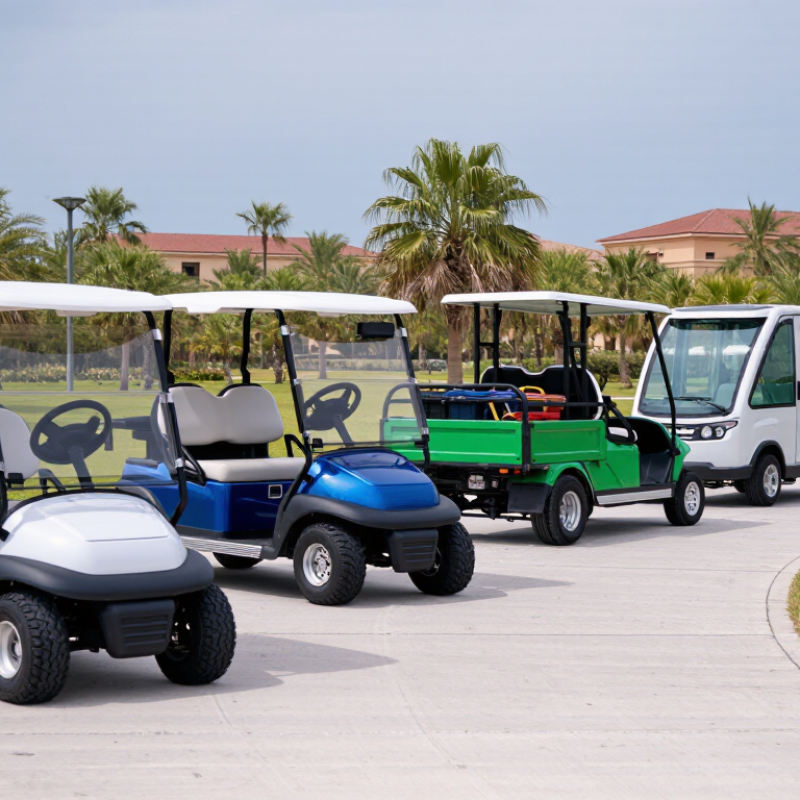
Golf carts are small vehicles, but their designs serve very different purposes. A basic two-seat cart suits short trips across private grounds or quiet communities. Extended models add rear seats, cargo space, or both. Utility versions may carry tools, bins, and light equipment. Their frames need stronger support when loads increase.
Power systems change how a cart feels and performs. Battery-powered carts are quiet and produce no direct exhaust during use. Lead-acid batteries cost less initially, but they require water checks and careful charging. Lithium batteries are lighter and usually charge faster, though replacement costs can be higher. Electric motors may use different voltage systems, so matching the charger and controller is essential. A wrong match can reduce battery life or create a safety risk. It happens more often than people expect.
Design details matter on real terrain. Larger tires improve clearance on uneven paths, while a longer wheelbase can feel steadier with passengers. However, lifted suspension may reduce easy entry and alter handling. Weather enclosures help during rain, but they can trap heat on warm days. Brakes, steering joints, tire pressure, and battery connections deserve regular inspection. A quick visual check is useful, but it cannot replace professional testing. Choosing a cart by appearance alone is tempting. It is also a common mistake. Consider passenger weight, slope, travel distance, storage space, and charging access before selecting a type.
Golf cart designs are commonly distinguished by seating capacity, chassis layout, and power system. Two-seat carts are suited to personal transportation and short-distance property travel. Four-seat models are commonly used by families, resorts, and residential communities. Six- and eight-seat configurations are designed for group transport at campuses, events, hospitality facilities, and large properties. Electric carts use rechargeable battery packs, while gasoline-powered carts are often selected where longer operating periods and rapid refueling are important. Actual capacity, range, speed, and payload vary by vehicle design and operating conditions.
Golf carts in 2026 serve more than traditional fairways. Electric carts suit golf courses, resorts, campuses, and residential communities. They offer quiet operation and simple daily charging. Gas-powered carts remain useful where long range and fast refueling matter. The choice is practical, not fashionable.
Utility carts include rear beds, stronger suspension, and towing equipment. Farms, parks, maintenance teams, and large properties often use them. Low-speed neighborhood vehicles support short urban trips and approved community roads. Their equipment and legal requirements vary by location. According to the National Golf Foundation’s 2024 participation report, 28.1 million Americans played golf on a course. That large user base helps sustain demand for reliable course transport. Industry forecasts from Allied Market Research also expect steady global golf-cart market growth through 2031. Forecasts differ, so treat them as direction, not certainty.
Tips: Match the cart to its route, load, and charging access. Check hill performance with a full passenger load. Measure storage space before buying. A four-seat cart may feel comfortable, yet reduce cargo capacity. Battery range also changes with temperature, terrain, tire pressure, and passenger weight. No single type wins every route. I have found that buyers often focus on speed first, then regret ignoring brakes, service access, and daily charging time. A careful test drive remains more useful than a glossy specification sheet.
2026 Best Golf Cart Types: What Are They Used For?
Best Uses for Personal, Resort, and Neighborhood Golf Carts
Personal golf carts suit short trips, property maintenance, and quiet outdoor travel. A two-seat model works well for errands on private land. Rear seating or a cargo bed adds flexibility for families and gardeners. The National Golf Foundation reported 531 million rounds played in the United States during 2023. That figure shows why course-focused carts still matter, but ownership now extends beyond fairways. I have found that range estimates often feel optimistic when hills, passengers, and heavy loads are involved.
Resort golf carts prioritize comfort, storage, and frequent daily use. Staff can move guests, luggage, towels, and supplies across large properties. Weather protection becomes valuable during sudden rain or intense sunlight. A 2024 industry analysis from Grand View Research identifies commercial applications as a major golf cart market segment. That supports the growing role of carts in hospitality operations. Yet quiet operation alone does not guarantee a better guest experience. Poor seating, limited storage, or slow charging can create visible service problems.
Neighborhood carts work best for short, planned journeys between homes, community facilities, and local amenities. They need dependable brakes, lights, mirrors, and simple controls. The U.S. Department of Energy’s Alternative Fuels Data Center notes that electric vehicles generally require less routine maintenance than conventional vehicles. That advantage can reduce upkeep for regular neighborhood use. Still, buyers should verify local operating rules and available charging space. The smallest cart is not always the most practical choice.
| Golf Cart Type | Best Uses | Typical Capacity | Typical Speed | Typical Single-Charge Range | Ideal Terrain | Main Advantages | Important Considerations |
|---|---|---|---|---|---|---|---|
| Personal Two-Seat Cart | Private-property transportation, short trips, gardening, light errands, and recreation. | 2 passengers; limited storage or a small rear platform. | About 12–15 mph (19–24 km/h). | Approximately 15–40 miles (24–64 km). | Paved paths, residential roads where permitted, driveways, and maintained private property. | Compact size, easy maneuverability, lower energy use, and generally lower purchase and maintenance costs. | Limited passenger and cargo capacity; public-road use depends on local laws and vehicle equipment. |
| Personal Four-Seat Cart | Family transportation, community travel, outdoor activities, and moving several passengers around large properties. | 4 passengers; some configurations offer rear seating that folds for cargo. | About 12–20 mph (19–32 km/h). | Approximately 15–40 miles (24–64 km). | Paved roads, compact paths, and gently sloped private roads. | More seating flexibility while remaining smaller and easier to park than a full-size vehicle. | Extra passengers reduce range and hill-climbing performance; confirm local requirements before road use. |
| Neighborhood-Ready Cart | Short neighborhood trips, local community travel, visiting nearby amenities, and low-speed transportation. | 2–6 passengers, depending on seating layout. | Often 15–25 mph (24–40 km/h), subject to local limits. | Approximately 20–50 miles (32–80 km). | Paved streets and low-speed roads approved for the vehicle type. | Convenient for nearby travel and may include road-use equipment such as lights, mirrors, seat belts, and turn signals. | Street legality is jurisdiction-specific; registration, insurance, licensing, and safety equipment may be required. |
| Resort and Hotel Shuttle Cart | Guest transportation between rooms, lobbies, pools, parking areas, event spaces, and recreational facilities. | 4–8 passengers; larger shuttle bodies may carry more. | About 10–20 mph (16–32 km/h). | Approximately 20–50 miles (32–80 km), depending on duty cycle and load. | Paved resort roads, walkways designed for vehicle access, and maintained grounds. | High passenger turnover, quiet operation, easy boarding, and good visibility in pedestrian areas. | Requires scheduled charging, routine inspections, trained operators, and careful pedestrian-safety procedures. |
| Utility and Maintenance Cart | Landscaping, facility maintenance, groundskeeping, tools transport, waste collection, and light material handling. | 1–2 passengers plus a cargo bed or utility attachment. | About 12–20 mph (19–32 km/h). | Approximately 15–40 miles (24–64 km), depending on cargo weight and terrain. | Paved surfaces, compact gravel, grass, and light-duty work areas. | Cargo-bed flexibility, tight turning radius, low operating noise, and useful access in confined areas. | Payload limits must be observed; heavy loads, steep slopes, and rough terrain can affect stability and braking. |
| Off-Road Recreation Cart | Trail riding, camping, hunting-property access, outdoor recreation, and travel across uneven private land. | 2–6 passengers, depending on configuration. | About 15–25 mph (24–40 km/h). | Approximately 15–40 miles (24–64 km), with terrain having a major effect. | Firm trails, grass, compact dirt, moderate slopes, and uneven private terrain. | Higher ground clearance, more capable tires, improved suspension, and better traction than basic carts. | Not automatically approved for public roads; steep slopes, water, loose soil, and overloaded seating increase risk. |
| Accessibility-Focused Cart | Accessible transportation for guests, residents, staff, and passengers who need easier boarding or mobility support. | Typically 2–6 passengers, with space varying by accessibility design. | About 8–15 mph (13–24 km/h). | Approximately 15–40 miles (24–64 km). | Smooth, accessible paths and paved areas with suitable turning and loading space. | Step-through access, handrails, stable boarding, and layouts that can accommodate mobility equipment. | Check ramp dimensions, securement systems, weight limits, turning radius, and applicable accessibility standards. |
Specialized golf carts now support maintenance crews, campus transport, resorts, farms, and outdoor recreation. The National Golf Foundation reported about 531 million golf rounds in the United States during 2023. That activity reflects a continuing need for reliable, low-speed transport around large properties. Work carts usually include a steel cargo bed, lockable storage, towing points, and stronger suspension. A maintenance worker can carry tools, irrigation parts, and several bags without returning to a workshop. Electric models also reduce noise near hotels, schools, and residential areas.
Passenger carts serve resorts, event venues, retirement communities, and private facilities. Rear-facing seats improve capacity, while weather curtains help during sudden rain. Recreation-focused models need all-terrain tires, stable braking, and enough ground clearance for gravel paths. Industry market research from Grand View Research identifies utility and personal transportation as important golf cart applications. However, published range figures can mislead. Heavy loads, hills, cold weather, and frequent stops may reduce real-world distance.
Choose by duty, not appearance. A narrow cart works better on crowded service routes. A longer chassis may carry more passengers but needs wider turning space. Check the rated payload, braking performance, battery warranty, and charging requirements. Small details matter. A poorly placed cargo bed can obstruct visibility. I would also test the cart on the actual route before purchase, because specifications rarely capture every slope, doorway, or muddy section.
Choosing the right golf cart starts with its daily job, not its appearance. A two-seat cart works well for short course trips, gated communities, and simple neighborhood transport. A utility cart suits farms, large properties, and maintenance work. It may carry tools, bags, or light equipment more safely. Lifted carts handle uneven paths better, but they can feel less stable on sharp turns.
Start with your usual distance and terrain. Measure narrow gates, garage spaces, and storage areas before purchasing. Do not guess. A full cart can need more room than expected. Check the rated passenger and cargo capacity in the owner’s manual. Overloading reduces braking control and can damage suspension parts. For hilly routes, choose a model with dependable brakes, strong hill performance, and suitable ground clearance.
Battery choice also affects ownership. Lead-acid batteries usually cost less initially, but they need regular water checks and cleaning. Lithium batteries are lighter and often charge faster, though the purchase price is higher. Ask about charging time, replacement cost, service access, and weather protection. Inspect the tires, steering, frame, lights, and battery connections before paying. I once focused too much on speed and overlooked storage space. That mistake mattered. A quieter, slower cart would have fit my real needs better. Local operating rules may also differ, so verify them before using the cart on public roads.
A two-seat cart works well for private grounds, quiet communities, and short errands. Measure storage space carefully.
Choose a utility model for tools, garden materials, bins, or light equipment. Stronger frame support helps with heavier loads.
Lead-acid batteries usually cost less initially and need water checks. Lithium batteries weigh less and often charge faster. Replacement costs may be higher.
Voltage differences can shorten battery life or create safety risks. Check the charger, controller, and battery specifications together.
Consider passengers, cargo, slopes, travel distance, gates, garage space, and charging access. Appearance alone can mislead buyers.
Larger tires and lifted suspension improve ground clearance. However, entry becomes harder and sharp turns may feel less stable.
Reliable brakes, lights, mirrors, and simple controls matter most. Short planned journeys usually need practicality more than speed.
Check tire pressure, brakes, steering joints, frame condition, lights, and battery connections. A quick glance helps, but professional testing remains important.
Resorts need comfortable seating, weather protection, storage, and dependable daily charging. Guests notice poor storage quickly. That part is easy to underestimate.
Do not focus only on speed or appearance. I once overlooked storage space, and the cart fit poorly afterward. Measure twice.
Golf carts in 2026 are available in many designs, power systems, and sizes, ranging from compact two-seat models to larger utility and passenger vehicles. Their main differences include electric or fuel-powered systems, seating capacity, cargo space, ground clearance, safety features, and overall construction. Understanding these basics helps buyers compare standard carts with neighborhood vehicles, resort transporters, work-focused utility carts, and recreational models.
So, what are golf carts used for? They are commonly used for short-distance travel on golf courses, private communities, resorts, campuses, farms, warehouses, and outdoor venues. Personal carts are convenient for local transportation, while resort and neighborhood carts support passenger movement and daily errands. Specialized versions can carry tools, supplies, equipment, or multiple passengers, making them useful for maintenance, events, transportation, and recreation. Choosing the right cart depends on where it will operate, how many people or materials it must carry, the required travel range, terrain, storage needs, maintenance preferences, and the intended frequency of use.

Kabar Golf